
How to Actually Learn SEO in 2026
Three things have changed the way SEO gets taught since most listicles like this one were written. First, the authoritative sources got better: Google’s own documentation now covers more ground more clearly than it did a decade ago, and the Search Relations team publishes substantive official guidance several times a month. Second, the major SEO tools built their own academies, and most of them are free. Third, AI search (AI Overviews, ChatGPT Search, Perplexity) created a new layer of skills that older learning resources simply don’t cover.
That means the right order to learn SEO in 2026 is different from what it used to be. Start with the official Google documentation and one comprehensive beginner’s guide. Layer in a structured course from a tool you plan to use day-to-day. Follow two or three news publications for ongoing updates. Add a newsletter or podcast for strategic perspective. Skip most of the ten-year-old guides that still rank for “learn SEO” queries, because the tactics they recommend are often obsolete.
For beginners: plan on 8-12 weeks of focused study to cover the fundamentals. Start with the Google SEO Starter Guide, then work through Moz’s Beginner’s Guide to SEO in parallel with the Semrush Academy “SEO Fundamentals” course. Build a small test site (even a WordPress blog) to apply everything you read as you read it. Theory without practice decays fast.
For intermediate SEOs: you already know the basics but need depth in one or two specializations. Pick your specialty (technical SEO, content, link building, local, e-commerce, or AI search) and go deep. Ahrefs Academy, Moz Academy, and the Yoast structured-data course are all good specialization paths. Follow Kevin Indig’s Growth Memo and Aleyda Solis’s SEOFOMO to stay current on where the field is heading.
For advanced SEOs: your learning is mostly about staying sharp in a field that keeps changing. Subscribe to one news publication (Search Engine Journal or Search Engine Land), one newsletter (Growth Memo or SEOFOMO), and one podcast (Marketing O’Clock or Search With Candour). Read Sistrix’s post-update analyses after every Google core update. Study Google’s Search Central Blog for first-party information before the third-party takes arrive.
The 43 resources below are organized by how you’d actually use them, from official sources through free courses and industry news down to communities and reference material. Every link has been verified active in 2026. Pick a handful that match where you are and work through them in order. Reading all 43 isn’t the goal. Applying what you learn is.
Official Google Sources
Start here. These four resources are the primary source for everything else you’ll read, and they’re written and maintained by the team that actually builds Google Search.
1. Google Search Central
Google Search Central is the official hub for everything SEO from Google itself: guidelines, documentation, tools, the Search Console product, and developer references. It’s where structured data specs live, where crawling and indexing documentation is kept, and where Google publishes official guidance on everything from site moves to AI Overviews eligibility.
Any SEO claim you read on a third-party blog should ultimately trace back to something here. If the third-party source contradicts Search Central, trust Search Central. The site is well-organized with dedicated sections for Beginner SEO, Advanced SEO, Technical SEO, AI-generated content, and Structured Data. Recent additions cover JavaScript rendering, Core Web Vitals, and the metadata signals Google uses for AI Overviews.
Best for: anyone who needs primary-source SEO documentation, especially for technical topics.
2. Google SEO Starter Guide
The SEO Starter Guide is Google’s own beginner’s guide to SEO. It covers the minimum every site should do: make your content crawlable, use descriptive titles and meta descriptions, avoid keyword stuffing, build a logical site structure, and encourage quality links. It’s short, plain, and completely free. Treat it as the first read for anyone new to the field.
Don’t mistake the brevity for shallowness. Every sentence in the Starter Guide has been vetted by Google’s own Search Relations team, which means every recommendation is genuinely current. Compared to any third-party “beginner’s guide to SEO” you’ll find ranking on the web, the Starter Guide has zero questionable claims and no hidden product pitch.
Best for: absolute beginners and anyone who needs to re-verify what Google actually recommends.
3. Google Search Central Blog
The Search Relations team at Google (John Mueller, Gary Illyes, Lizzi Sassman, Martin Splitt, and others) publishes every major change to the algorithm, every documentation update, and every new feature through this blog. If you want to know what Google actually said about a change, rather than what third-party analysts inferred from it, check here first.
Posts tend to be short and technical. They don’t contain speculation or hot takes, which is refreshing in an industry full of both. Recent coverage has included definitive guidance on AI Overviews eligibility, structured-data requirements for generative search, and the 2026 core updates.
Best for: practitioners who want first-party news before the commentary arrives.
4. Search Off the Record Podcast
The Search Relations team’s podcast goes deeper than the blog. Episodes cover behind-the-scenes decision-making on features, frank discussion of what Google Search struggles with, and interviews across Google teams that touch search. New episodes drop every few weeks. Available on Apple Podcasts, Spotify, and the usual platforms.
Where the blog is tight and procedural, Search Off the Record is conversational. Googlers sometimes reveal things in casual discussion that wouldn’t fit a formal blog post, and the historical perspective from engineers who have been on the team for years is genuinely valuable.
Best for: commute learning and understanding Google’s internal perspective on SEO.
Free In-Depth Guides
These are the best single-sitting guides to SEO on the open web. Each one is free, each one is kept current, and together they cover 90% of what a working SEO needs to know.
5. Moz Beginner’s Guide to SEO
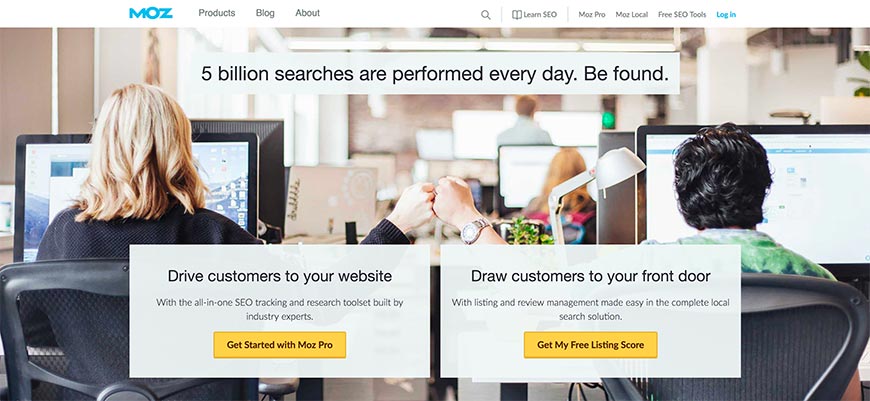
The Moz Beginner’s Guide to SEO is the most-cited free SEO resource on the open web, and for good reason. Eight chapters walk new practitioners through how search engines work, keyword research, on-page SEO, technical SEO, link building, measurement, and how SEO fits into the broader marketing picture. It’s updated substantively every year or two, and Moz’s team keeps an eye on stale sections.
The tone is teacherly and patient. Concepts are introduced in the right order, with plain-language explanations and linked follow-up reading for readers who want to go deeper. If you read only one thing from this list, read this.
Best for: anyone learning SEO from scratch who prefers comprehensive coverage over short summaries.
6. Ahrefs Complete SEO Guide
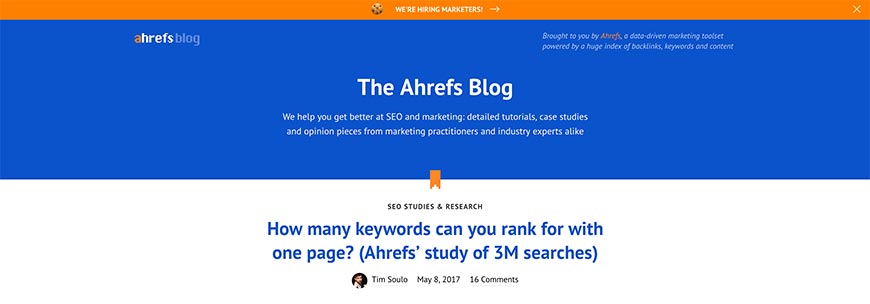
Ahrefs’ SEO guide is shorter than Moz’s but denser. Seven chapters, each tightly written, walking through the mechanics of modern SEO with data from Ahrefs’ 35-trillion-link index backing the claims. The guide is useful both as a first read for someone who prefers a quicker tour of the field and as a refresher for experienced SEOs.
Where Moz leans teacherly, Ahrefs leans analytical. Both approaches work; different learners prefer different ones. Some readers work through both guides back-to-back and gain from the slightly different framing each uses for the same fundamentals.
Best for: learners who prefer data-backed, concise explanations.
7. Backlinko Guides
Brian Dean built Backlinko on long-form, exhaustively researched guides. The full library (acquired by Semrush in 2022 but kept up to date) covers link building, on-page SEO, keyword research, content marketing, and SEO for specific site types. Dean’s template-style guides define the modern SEO long-form format, and most later guides borrow from them.
Individual Backlinko guides are often 5,000-plus words of dense tactical advice, with screenshots, step-by-step walkthroughs, and specific examples. This makes them better for focused learning (pick one topic, learn it end-to-end) than for casual browsing.
Best for: link building, content strategy, and deep specialization in one topic at a time.
8. Search Engine Journal Complete SEO Guide
SEJ’s SEO guide is a curated collection of ebooks and long-form articles covering technical SEO, content strategy, link building, local SEO, international SEO, and AI search. New chapters get added as the field evolves. The AI Search playbook in particular has been updated heavily since 2024 and covers how LLMs pick citations, what metadata signals they prefer, and how to build content for AI Overview eligibility.
Unlike a book-style guide, SEJ’s version is modular. You can jump directly to the chapter you need without reading the earlier sections, which makes it useful as a reference once you’re past the fundamentals.
Best for: intermediate SEOs who need depth in specific subtopics.
9. Yoast SEO for Beginners (Free Course)
Yoast’s free “SEO for Beginners” course is a structured intro taught in short video lessons. Good for people who prefer watching over reading. The course focuses on content SEO and readability, which are Yoast’s strongest areas, and works especially well if you’re running a WordPress site and plan to use the Yoast plugin.
The free tier covers the fundamentals well enough that most small-site owners won’t need to pay for anything more. If you later want to go deeper, the paid Yoast Academy courses pick up where the free one leaves off.
Best for: WordPress site owners and video learners.
10. Semrush Beginner’s Guide to SEO
Semrush’s beginner’s guide covers the full SEO lifecycle (keyword research, on-page, technical, link building, analytics) with a slight emphasis on Semrush’s own tools. The tool integrations are often where SEO guidance gets vague, so seeing actual workflow steps with specific tool screenshots is useful for anyone planning to use Semrush professionally.
The guide links outward to more specialized posts on the Semrush blog as each topic deepens, which makes it a good entry point into a larger content library.
Best for: learners planning to use Semrush as their primary SEO toolset.
SEO Academies & Structured Courses
Past the free guides, structured multi-course platforms teach SEO in the right progression: fundamentals, specialization, then measurement. Most of these are free.
11. Semrush Academy
Semrush Academy has 15-plus free courses ranging from “SEO Fundamentals” to “Advanced Backlink Management” and a dedicated track for AI search optimization. Each course includes a certificate on completion. Taught by well-known SEO practitioners including Bruce Clay, Greg Gifford, and others. The cadence is steady: new courses appear every few months.
The real value is the specialization tracks. Semrush Academy has separate paths for technical SEO, local SEO, international SEO, and content SEO. Each track is maybe 10-15 hours of video and reading, which is a reasonable time commitment for learning a specialization end-to-end.
Best for: learners who want structured, certificate-granting courses at no cost.
12. Ahrefs Academy
Ahrefs Academy combines training videos, blog content, and tool walkthroughs into structured learning paths. Free to use; an Ahrefs paid subscription isn’t required to access most courses. Sam Oh’s walkthrough videos in particular are a good way to learn both SEO fundamentals and the mechanics of using Ahrefs tools.
The Ahrefs free courses focus on link building, keyword research, and technical SEO, which happen to be the areas where Ahrefs itself is strongest. If you plan to use Ahrefs professionally, working through Academy is the fastest way to get productive with the tool.
Best for: video learners and anyone planning to use Ahrefs as their primary toolset.
13. Moz Academy
Moz Academy offers more than a dozen on-demand SEO courses, from foundational topics through advanced technical SEO. Some are free, some are paid or bundled with a Moz Pro subscription. Courses are taught by recognized industry experts (Britney Muller, Cyrus Shepard, and others) and align tightly with Moz’s own tools.
Moz Academy’s technical SEO track is particularly well-regarded and covers topics like site architecture, internal linking, and JavaScript rendering at real depth. The certification, while not universally recognized, carries weight in SEO-specific hiring.
Best for: intermediate SEOs who want structured specialization courses.
14. HubSpot Academy SEO Training
HubSpot Academy’s SEO course is a full certification track covering keyword research, on-page optimization, technical SEO, and link building. The course is free, widely recognized on resumes, and pairs well with HubSpot’s broader inbound marketing curriculum. Good for marketers who need SEO as one skill among many.
HubSpot Academy includes dozens of other certifications (content marketing, email marketing, inbound sales) that integrate well with the SEO track. If your role spans multiple channels, working through several HubSpot Academy certifications is a solid way to round out the broader marketing skill set.
Best for: inbound marketers and anyone who needs SEO alongside broader marketing skills.
15. Yoast Academy
Yoast Academy houses Yoast’s expanded course catalog beyond the free SEO for Beginners class. Paid tracks cover structured data, WordPress SEO, and content SEO in depth, and the academy’s structured data course is one of the best single resources for that specific topic.
The structured data course is worth calling out separately: it covers JSON-LD implementation, schema.org types, Google’s required and recommended properties, and how to validate markup with the Rich Results Test. For anyone whose SEO work involves implementing schema, it’s a shortcut to proficiency.
Best for: WordPress site owners and anyone specializing in structured data.
16. UC Davis SEO Specialization on Coursera
University of California, Davis offers a formal SEO Specialization on Coursera: four courses plus a capstone project, taught by SEO practitioners and academics. A certificate is included, and the program is available as part of Coursera Plus. Good for anyone who wants university-credentialed SEO learning.
The specialization runs roughly 3-6 months at a few hours per week. The academic framing means it’s slower-paced than a tool academy course, but the capstone project (where you do SEO analysis on a real site) is worth the investment for people who need a portfolio piece to show hiring managers.
Best for: career switchers who want a formal credential and a portfolio project.
17. Google Digital Marketing & E-commerce Certificate
Google’s own professional certificate on Coursera is a seven-course program covering SEO alongside paid media, email marketing, and e-commerce. The SEO course specifically is a solid foundational introduction, and the certificate itself carries weight in job applications because it’s Google-branded.
The program takes about 6 months at 10 hours per week. It’s more breadth than depth, which makes it a better fit for generalist digital marketers than specialist SEOs.
Best for: career switchers targeting digital marketing roles broadly.
18. Udemy SEO Courses
Udemy’s SEO catalog is massive, and quality varies widely. The upside is that specialized topics (local SEO, e-commerce SEO, YouTube SEO, Shopify SEO) get their own dedicated courses taught by working practitioners. Filter by recent reviews and recent publish dates to avoid obsolete material.
A few consistently well-reviewed Udemy instructors (like Joshua George and Brad Merrill) have courses that stay updated year-over-year. Price-wise, Udemy courses frequently run $15-25 during sales, which is low friction for trying a new specialization.
Best for: hyper-specific SEO topics not covered by the major academies.
Industry News Publications
For ongoing learning, news publications cover the day-to-day changes in search. These are the four worth subscribing to.
19. Search Engine Journal
SEJ publishes multiple pieces a day across SEO, PPC, social, and AI search. Deep contributor bench (Kevin Indig, Lily Ray, Roger Montti, others). The annual State of SEO report pulls data from thousands of practitioners and is one of the most-cited pieces of research in the field.
SEJ’s podcast network (including Marketing O’Clock, listed separately) adds another layer of regular content. For anyone who wants one comprehensive SEO news source, SEJ is the default pick in 2026.
Best for: daily SEO news and broad topical coverage.
20. Search Engine Land
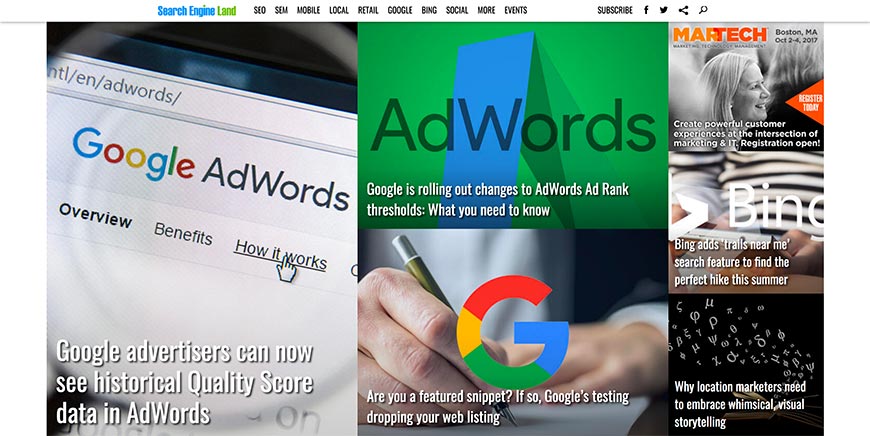
Founded by Danny Sullivan (now at Google) in 2006, Search Engine Land has been the industry’s paper of record for nearly two decades. Strong opinion columns, deep algorithm-update analysis, and a long bench of contributors. Semrush acquired Search Engine Land’s parent company in 2024 but editorial independence has been preserved.
Search Engine Land’s editorial standards are stricter than most SEO publications, which shows in the analysis. When they cover a core update, expect data from multiple rank-tracking vendors and named-expert commentary, not just a rehash of the Google announcement.
Best for: comprehensive industry news with more editorial depth than most SEO publications.
21. Search Engine Roundtable
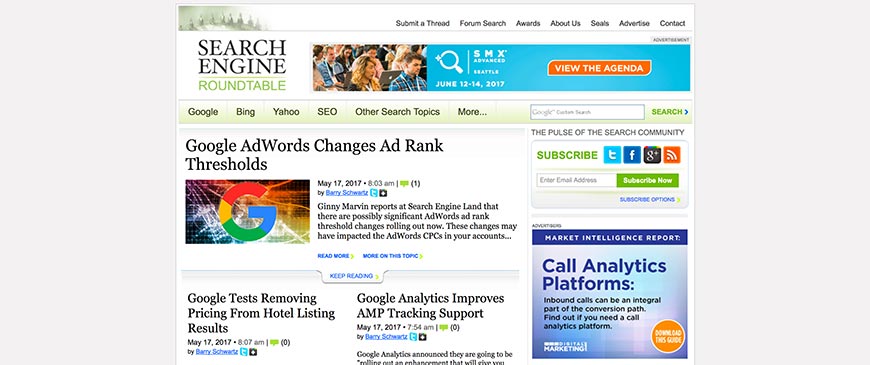
Barry Schwartz has been running Search Engine Roundtable since 2003 and posts several times a day, every day. Best place on the web for real-time Google algorithm chatter and forum-discovered ranking shifts. When Google quietly changes something, Roundtable usually reports it first.
Posts are short and transactional: Barry surfaces chatter from webmaster forums, notes ranking fluctuations picked up by rank trackers, and confirms or denies rumors with whatever data is available. This is real-time SEO news, not analysis.
Best for: anyone who needs to know about Google changes in near-real-time.
22. Search Engine Watch

One of the oldest SEO publications on the web, Search Engine Watch still publishes regularly in 2026, covering meta tags, structured data, AI search optimization, and comparisons between traditional and AI-based search. Useful as a second read alongside Search Engine Journal.
Search Engine Watch leans more toward case studies and how-to guides than breaking news. The content is less time-sensitive than SEJ or Search Engine Land but often more practical, with step-by-step tutorials you can apply the same day.
Best for: practitioners who want how-to guides alongside industry news.
Solo Voices & Newsletters
Some of the highest-signal SEO content in 2026 lives in newsletters and personal blogs, not publications. These five are the ones worth subscribing to.
23. SEOFOMO by Aleyda Solis
If you only follow one SEO newsletter, make it this one. Aleyda Solis curates the week’s most important SEO news, resources, jobs, and events and sends it to 35,000-plus subscribers every Sunday. Notable for the quality of curation: she actually reads everything and picks only what’s worth your time.
Aleyda is also an active speaker and consultant, which means the newsletter frequently surfaces conference talks, slide decks, and industry events that aren’t covered well by the major publications. Subscribing to SEOFOMO is probably the single highest-ROI SEO-learning action you can take in 2026.
Best for: anyone who wants a high-signal weekly digest instead of daily feeds.
24. LearningSEO.io
Aleyda Solis’s free SEO learning roadmap is structured around beginner-to-advanced paths, with curated links to the best available resource for each SEO topic. If you want one page that tells you what to learn next, in what order, and where to learn it from, this is it. Updated continuously.
LearningSEO.io is the closest thing to a syllabus you’ll find for free SEO education. Each node in the roadmap links to a specific external resource (Google documentation, Moz guide, Ahrefs guide, and so on), which means the site itself isn’t teaching you — it’s pointing you at the best available teacher for each topic.
Best for: beginners who want a structured learning path.
25. Growth Memo by Kevin Indig
Kevin Indig’s weekly newsletter is the best source of data-backed SEO strategy in the AI era. His State of AI Search Optimization reports have been some of the earliest and most rigorous analyses of how LLMs cite sources and how to show up in AI-generated answers. Over 25,000 subscribers.
Kevin previously led SEO at Shopify and G2, which shows in his framing. His analysis tends to be strategic rather than tactical: how to think about SEO as a growth function, when to invest in content vs. technical work, and what actually moves the needle for business outcomes.
Best for: senior SEOs and growth leaders making strategic decisions.
26. Exploding Topics by Brian Dean
After Backlinko’s 2022 acquisition by Semrush, Brian Dean shifted focus to Exploding Topics, which identifies emerging trends earlier than mainstream SEO tools typically catch them. The newsletter pairs trend spotting with content-marketing strategy.
The underlying tool uses ML to surface topics that are growing in search volume before they hit mainstream keyword research tools. Useful for anyone thinking about what to publish next, not just how to rank what’s already there.
Best for: content strategists and anyone looking for early-mover content opportunities.
27. The Bruce Clay Blog
Bruce Clay has been in SEO since the 1990s. The blog reflects that depth with technical coverage of on-page optimization, site architecture, and siloing. The voice is senior-practitioner, which some readers find dense and others find refreshingly direct.
Bruce Clay’s own SEO Code of Ethics predates most of today’s SEO conferences and still holds up. The agency publishes detailed technical guides that are referenced widely. Good for learners who want the long-view perspective on the field.
Best for: veteran SEOs and anyone who wants context on how the field has evolved.
Tool Blogs with Real Data
Tool blogs have access to data most independent SEOs don’t. These six are worth following for research-backed posts, not just promotional content.
28. The Moz Blog
Famous for Whiteboard Friday videos, Search Ranking Factors research, and the friendly, teacherly tone that made Moz a community hub. Still publishing several posts a week, and the archive is vast.
Recent Moz coverage has leaned into AI search, entity optimization, and how Google’s evaluation of quality has shifted post-Helpful Content. The biennial Search Ranking Factors study remains one of the most-cited pieces of industry research.
Best for: learners who want accessible SEO content alongside structured research.
29. Ahrefs Blog
Data-driven SEO content pulled from the Ahrefs index. Original research on topics like what percentage of top-ranking pages earn backlinks, how often Google re-crawls deep pages, and time-to-rank studies. The kind of content other SEO blogs cite for years.
The Ahrefs blog is particularly strong for anyone learning link building at depth. The team has published multiple quantitative studies on link metrics, decay rates, and the relationship between backlinks and rankings that are effectively required reading for link-focused SEOs.
Best for: intermediate-to-advanced SEOs who want data, not opinions.
30. Semrush Blog
Broader in scope than Ahrefs (SEO, PPC, content marketing, social), with data backing from Semrush’s 43-trillion-link index. Semrush’s State of Search reports and the full Backlinko archive both live under the Semrush umbrella now.
Volume is high, so subscribe to topic-specific RSS feeds (Technical SEO, Local SEO, AI Search) rather than the everything-feed. The content is well-edited and generally on-trend.
Best for: SEO managers and content strategists who want cross-channel coverage.
31. Sistrix Blog
Sistrix’s blog publishes detailed visibility analyses after every Google core update and has been ahead of the field on measuring AI Overview impact (position-one CTR falls from 27% to 11% when an AI Overview shows, per Sistrix’s March 2026 analysis). Particularly strong on European search data.
For anyone trying to understand the actual, measured impact of Google updates and AI search on organic traffic, Sistrix’s post-update reports are the single best public data source. The tone is dry and technical, which is refreshing in an industry often prone to hot takes.
Best for: data-driven SEOs and anyone working on multi-market or European sites.
32. Majestic Blog
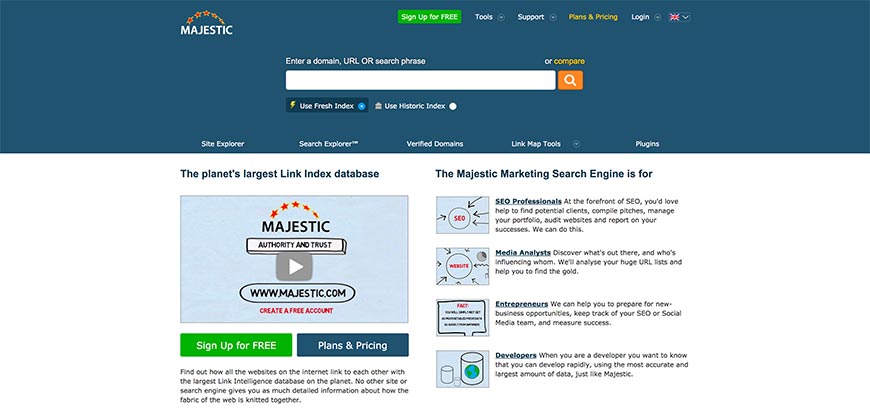
Majestic specializes in backlink intelligence, and the blog focuses accordingly: Trust Flow, Citation Flow, link-graph research, and original studies on link patterns at scale. Less frequent than the other tool blogs but consistently substantial when it does publish.
Majestic’s Historic Index (going back decades of crawl data) makes it uniquely useful for understanding long-term link trends and for auditing domains that have existed for many years. The blog’s analyses draw on this historic data in ways other tools can’t match.
Best for: link-focused SEOs and anyone auditing old domains.
33. CognitiveSEO Blog
Practical tactics around backlink analysis, penalty recovery, and content optimization. Strong on unnatural-link detection and recovery case studies. Useful for any SEO whose work involves backlink cleanup or reacting to manual actions.
The team has been particularly strong on the topic of how to audit a backlink profile for risk (spammy domains, toxic anchors, unnatural velocity) and the correct sequence for disavow and removal requests. Penalty-recovery content on CognitiveSEO is grounded in real client casework.
Best for: SEOs doing backlink audits or defensive link monitoring.
Podcasts & Video Channels
For commute learning, these five keep you current without requiring you to sit at a desk reading.
34. Marketing O’Clock
Search Engine Journal’s weekly news podcast. Covers the week’s biggest SEO, PPC, and marketing developments in about 30 minutes. Hosted by Greg Finn, Jess Budde, and Christine “Shep” Zirnheld. Consistently good at surfacing the stories that actually matter from an otherwise noisy news cycle.
The format is conversational and fast, with the hosts reacting to news as it breaks. Good for anyone who wants to stay current on SEO but finds daily blog reading draining.
Best for: weekly commute listening.
35. Search With Candour
Mark Williams-Cook’s weekly podcast is one of the most technical SEO shows available. Topics lean toward the engineering side of search: crawl budgets, log-file analysis, rendering, and structured data. A good pick for technical SEOs who want depth over breadth.
Episodes often feature guests from tool vendors, search engines, and in-house technical SEO teams. The host’s British perspective adds useful commentary on how SEO differs across markets.
Best for: technical SEOs who want depth and international perspective.
36. Authority Hacker Podcast
Gael Breton and Mark Webster focus on SEO for affiliate and niche sites, the category where SEO has the narrowest margin for error. Tactics tested and published here tend to be battle-tested on live sites making real revenue, which makes the content more practical than most SEO podcasts.
The hosts frequently dissect specific niche sites (with permission or from public case studies) to show exactly what’s working. The Authority Hacker Pro course is paid but the podcast itself is free.
Best for: affiliate marketers and niche-site operators.
37. Ahrefs YouTube Channel
Sam Oh and the Ahrefs team produce video tutorials that consistently rank at the top of YouTube for the keywords they target. Good for visual learners and for anyone who wants to watch workflow walkthroughs rather than read them.
The channel covers both tool-specific walkthroughs (how to use Ahrefs features) and general SEO tutorials. The distinction matters less than you’d think, because the SEO tutorials often teach the best current workflow regardless of which tool you use.
Best for: video learners.
38. Moz Whiteboard Friday
The original SEO video series, now 15-plus years old. Short weekly explainers on specific SEO topics, presented at a literal whiteboard. The archive alone is a learning resource, and new episodes still drop on Fridays.
Whiteboard Friday’s format (10-15 minute videos with a single expert explaining one concept) hits a sweet spot for learners who want substantive content without a 45-minute time commitment.
Best for: bite-size weekly learning.
Communities & Q&A
When you have a specific question, communities usually have the answer faster than any blog can publish it.
39. Reddit r/SEO
One of the fastest pulse-checks on what’s working and breaking in search right now. The community discusses algorithm changes in real time, shares gray-hat experiments, and is less filtered than the official channels. Noisy, but often catches signals the major publications miss.
Reddit’s SEO community also tends to surface things established publications don’t cover: candid conversations about what clients are actually paying for, frustrations with specific Google behaviors, and niche-site case studies from anonymous practitioners. Treat it as a supplement, not a primary source.
Best for: real-time sentiment and community Q&A.
40. WebmasterWorld
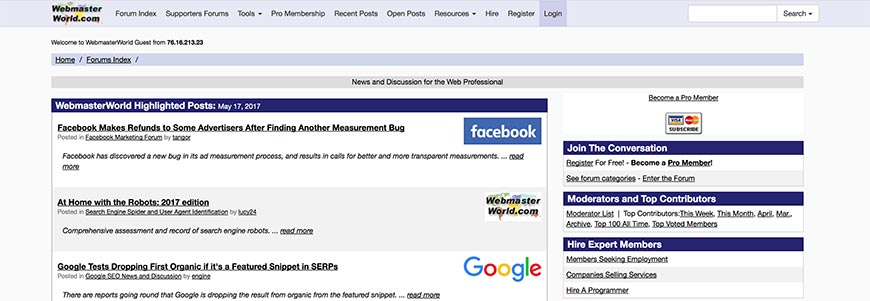
One of the oldest SEO forums on the web, dating to 2001. Activity is quieter than Reddit’s r/SEO, but the archive contains a lot of institutional SEO knowledge from practitioners who have been in the field for decades. Best used as a searchable reference when you hit a specific problem.
WebmasterWorld’s moderation style (strict, old-school forum norms) keeps signal high when new threads do appear. For questions about legacy SEO topics (meta keywords, old Google updates, historical PPC practices), the archive is uniquely valuable.
Best for: searchable reference for hard-to-find SEO topics.
41. Quora SEO Topic

Quora’s SEO topic aggregates questions and answers from working SEOs. Signal-to-noise is variable (beware the marketing-spam answers) but some of the industry’s best practitioners post there regularly. Useful for understanding how SEO is talked about outside its own echo chamber.
Quora answers by named SEO practitioners with consistent track records are the ones worth reading. Anonymous or anonymous-adjacent answers are usually noise. Filter accordingly.
Best for: specific Q&A beyond what forums tend to cover.
Reference Material & Archives
Finally, for deep background and reference, these two resources belong in every SEO’s bookmarks.
42. Wikipedia: Search Engine Optimization
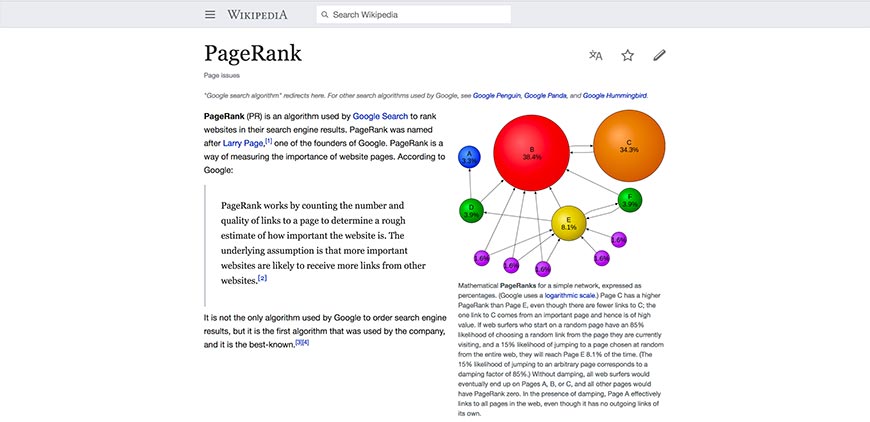
The Wikipedia SEO article covers the history of the field, how search algorithms evolved, the major Google updates (Panda, Penguin, Hummingbird, and onward), and the modern AI-search era. The references section is a goldmine of primary sources, academic papers, and Google engineer quotes that many SEO blogs cite but don’t link to.
The article is maintained by a mix of SEO practitioners and general Wikipedia editors, which keeps the neutrality roughly in check. The references at the bottom are often more useful than the article body for serious research.
Best for: historical context and finding primary-source references.
43. SEO by the Sea (Bill Slawski’s Archive)
Bill Slawski, the “prince of patents,” spent nearly two decades analyzing Google patents and explaining what they revealed about search algorithms. He passed away in May 2022, and his site has been preserved as an archive. The posts are dense and technical, but if you want to understand how Google actually works at the algorithm level, this archive is irreplaceable.
Bill read thousands of patents and translated them into plain-language SEO takeaways. Many modern SEO concepts (entity-based search, how Google interprets queries, how ranking signals combine) were explained publicly on SEO by the Sea years before they became mainstream knowledge.
Best for: advanced SEOs who want to understand the algorithmic underpinnings of search.
Frequently Asked Questions
What’s the best way to learn SEO from scratch?
Start with Google’s SEO Starter Guide to get the basics right. Then read the Moz Beginner’s Guide to SEO end-to-end. Then pick one structured academy course (Semrush Academy or HubSpot Academy are good starting points) to work through over a few weeks. By the time you finish those three steps, you’ll have a solid foundation and can move on to specialization: technical SEO, link building, content, or whatever direction your work demands. Build a small practice site alongside the reading. Theory without practice decays fast.
How long does it take to learn SEO?
Enough to do useful work: about three to six months of focused study plus hands-on practice. Enough to be considered an expert: three to five years of actual work. SEO changes constantly, so learning never fully ends. The practitioners who stay sharp are the ones who keep reading news publications and newsletters after the initial learning sprint. Treat SEO like any applied skill: you learn the fundamentals once and then update yourself quarterly for the rest of your career.
Do I need to pay for SEO courses?
No, not for the fundamentals. Everything in the Official Google Sources, Free In-Depth Guides, and SEO Academies categories above is either free or has a substantial free tier. Paid courses (Moz Academy’s advanced tracks, Udemy specialist courses, university certificates) can be worth it once you know your specialization and need depth. For beginners, free resources are more than enough to get started and to deliver real value in a job. Don’t spend money until you know what you’re buying.
Are SEO certifications worth anything?
Professionally, a certification from HubSpot, Google (via Coursera), or Semrush looks fine on a resume and proves basic competence. What hiring managers actually care about is a portfolio: sites you’ve ranked, case studies you can talk through, or Google Search Console screenshots showing results. Certifications open doors. Work history walks through them. A handful of certifications alongside one or two portfolio projects is the minimum for entry-level SEO hiring in 2026.
How do I keep up with SEO after I’ve learned the basics?
Pick one news publication (Search Engine Journal or Search Engine Land), one newsletter (SEOFOMO or Growth Memo), and one podcast (Marketing O’Clock or Search With Candour). Spend 15 minutes a day on news and one 30-minute podcast episode per week. That’s enough to stay current. Trying to read everything is a recipe for burnout, and the signal-to-noise ratio in SEO content has gotten worse as AI-generated posts proliferate. Curate ruthlessly.
What’s different about learning SEO in the AI search era?
AI Overviews, ChatGPT Search, and Perplexity have added a layer of skills the older guides don’t cover. You now need to understand how LLMs pick citations, what structured data they prefer, and how conversational search queries differ from traditional keyword queries. Kevin Indig’s Growth Memo, Sistrix’s blog, and Aleyda Solis’s SEOFOMO are the best current sources for these newer skills. Most general SEO resources are still catching up, and any course published before 2024 will be missing significant AI-search content.
Is it too late to start a career in SEO?
No. AI search has made the field more complex, not less relevant. Organizations still need people who understand how to make content findable, whether on traditional search, AI Overviews, or the LLM citations that feed generative answers. The skill set is broader than it was five years ago, which is actually a barrier to entry for casual practitioners and an advantage for anyone who invests in learning it properly.
What’s No Longer Worth Your Time
A few notes on resources that used to dominate “learn SEO” recommendations but don’t belong on a 2026 list. Microsoft’s IIS SEO Toolkit was discontinued and the download is no longer available; the rough equivalent of its features lives in Google Search Console now. Kissmetrics’ old ecommerce SEO guides were deleted when Neil Patel acquired the domain and removed over 1,000 posts, so links to that archive mostly redirect or 404. Jill Whalen’s High Rankings blog, once a foundational SEO resource, went dormant after Jill retired in 2013 (she passed away in June 2025). Bill Slawski’s SEO by the Sea is preserved as an archive, but no new content will appear. And Distilled’s DistilledU platform was rolled into Brainlabs after the 2020 acquisition and is no longer promoted as a standalone learning resource. Skip any 2018-era listicle that still recommends these as places to learn SEO today.
Bottom Line
Learning SEO in 2026 is simpler than it used to be if you start in the right place. Begin with Google’s own documentation. Layer in one comprehensive beginner’s guide (Moz or Ahrefs). Take one structured academy course. Subscribe to one news publication and one newsletter. Listen to one podcast. Skip the ten-year-old guides that still rank for “learn SEO” queries but recommend tactics that stopped working years ago.
The 43 resources above are the ones still worth your time. None of them will teach you SEO by themselves. What they give you, taken together, is everything you need to learn the field and stay current as it changes. For adjacent topics that pair well with this learning path, our guides on JavaScript and SEO and the best CMS for SEO in 2026 cover the technical and platform sides of the discipline.
Start with one resource today. Don’t wait to feel ready. SEO, more than most fields, rewards practitioners who apply what they learn as they learn it.