

What is an AI writing tool?
An AI writing tool is software that uses machine learning — almost universally large language models (LLMs) in 2026 — to help with writing tasks. Modern tools cluster into three buckets:
- General-purpose LLM assistants (ChatGPT, Claude, Gemini, Microsoft Copilot) — used for drafting, editing, brainstorming, and rewriting across every kind of content.
- Editing and quality tools (Grammarly, ProWritingAid, Hemingway, Yoast, Writefull, QuillBot, Copyscape, Readable) — focused on grammar, style, readability, originality, or SEO of text the writer has already drafted.
- Marketing- and long-form-content generators (Jasper, Writesonic, Copy.ai, ContentBot, Article Forge, Scripted, Phrasee, Textio) — purpose-built for blog posts, ads, emails, product copy, and other commercial output.
Does AI-written content rank in search?
Google’s position (clarified in its February 2023 guidance and reinforced through 2024-2025 Helpful Content updates) is that content quality matters more than how it was produced. AI-assisted content can rank well if it’s accurate, original, useful, and consistent with E-E-A-T (Experience, Expertise, Authoritativeness, Trustworthiness). The reverse is also true: low-effort AI content scraped or auto-generated without editing will not rank, and the March 2024 Core Update specifically targeted scaled content abuse. The practical answer: use AI to draft and accelerate, but ship something a human edited and stands behind.
Top 20 AI writing tools
1. Grammarly
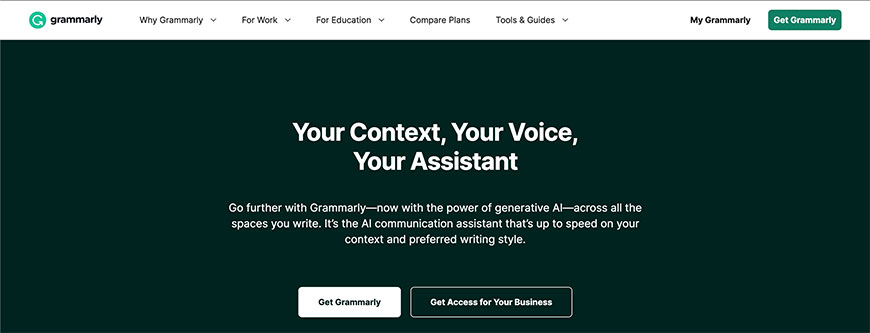
Grammarly remains the dominant grammar-and-style assistant with tens of millions of users, integrated into Microsoft Word, Google Docs, Gmail, Outlook, and most major browsers. Its Grammarly generative-AI suite (formerly GrammarlyGO) added drafting, rewriting, and tone-shifting on top of the classic correction features in 2023, and continues to expand with generative-writing features for business users.
2. ProWritingAid
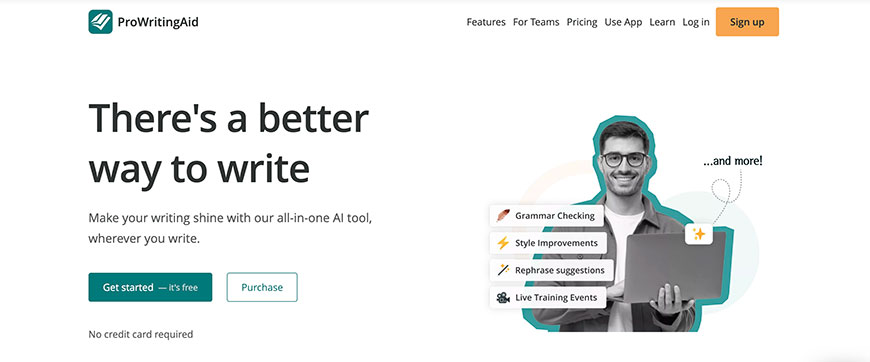
ProWritingAid is the deepest editing tool for long-form writers — fiction authors, academics, and serious bloggers. It runs grammar, style, readability, vague-wording, sticky-sentence, and pacing reports plus a comprehensive style guide. Recent versions added an AI rewrite feature that produces context-aware sentence-level suggestions.
3. Hemingway Editor
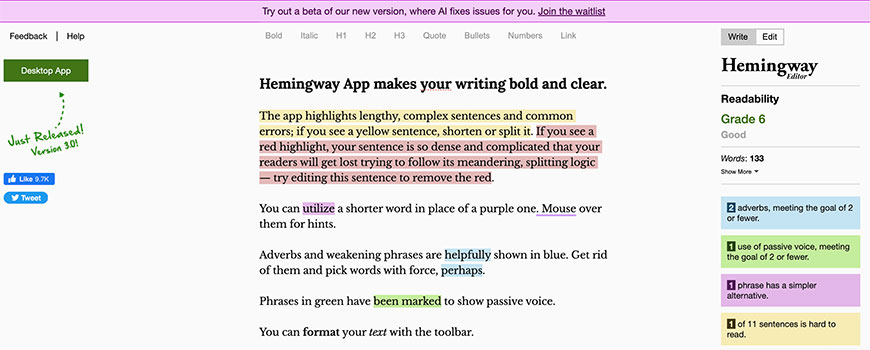
Hemingway Editor flags long sentences, passive voice, adverbs, and complex phrasing, and reports a Flesch-Kincaid reading-grade score. Hemingway Plus (launched 2024) added an AI rewrite layer that proposes simpler alternatives. Indispensable for writers targeting a specific reading level.
4. Yoast SEO
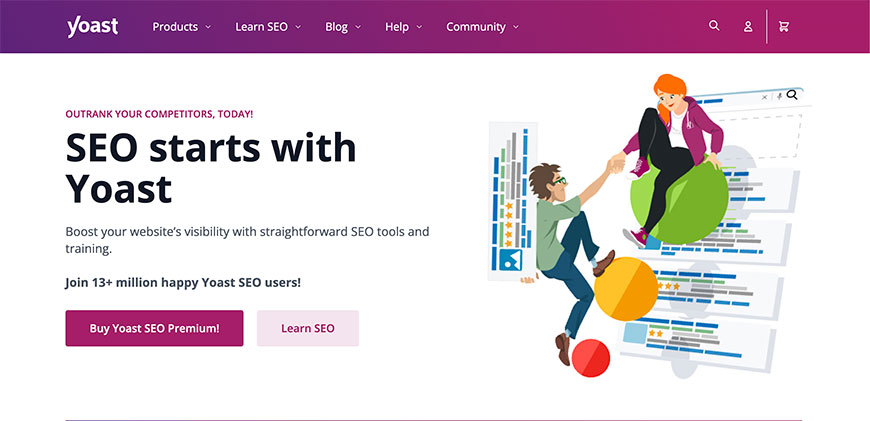
Yoast SEO is the most-installed WordPress SEO plugin, with on-page readability and SEO analysis built into the post editor. The AI features added in 2023-2024 generate optimized titles and meta descriptions on demand. The free version covers most basics; Yoast Premium adds the AI suite plus internal-linking suggestions, redirects, and multiple keyphrase support.
5. Writefull
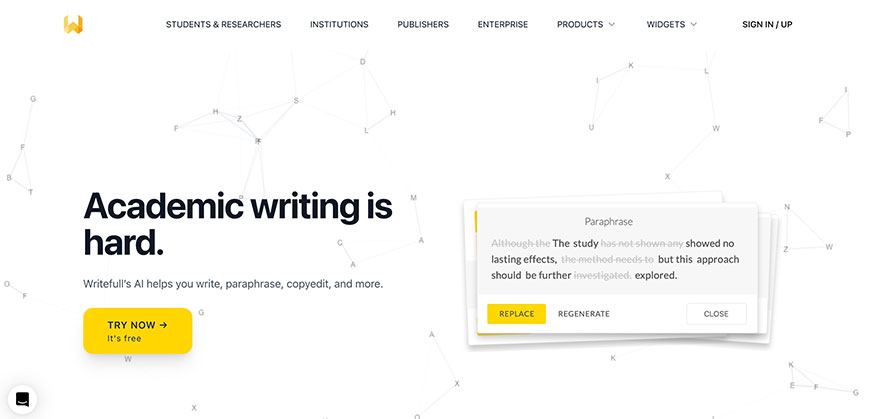
Writefull is the AI writing assistant focused on academic researchers — paraphrasing, language polishing, and abstract-summarizing tuned to scientific writing. Acquired by Digital Science in 2022 and integrated with Overleaf and other research-writing platforms, it’s the right pick for non-native English speakers writing papers.
6. QuillBot
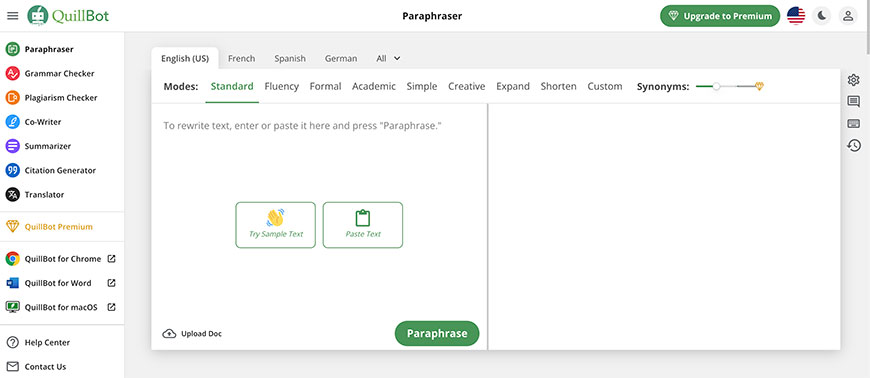
QuillBot is the most popular AI paraphrasing tool, used heavily by students and non-native English writers. Beyond paraphrasing it bundles a grammar checker, plagiarism checker, summarizer, citation generator, and translator. Acquired by Course Hero (now Learneo) in 2021 and integrated into the broader Learneo learning suite.
7. Copyscape
Copyscape is the long-running plagiarism detector that publishers and content marketers use to verify originality before publishing. With AI-generated content now widespread, originality checks have evolved alongside; Copyscape still focuses on detecting verbatim or near-verbatim duplication on the public web. Pair it with a dedicated AI-detection tool (Originality.ai, GPTZero) if you specifically need to flag AI-generated text.
8. RAD AI
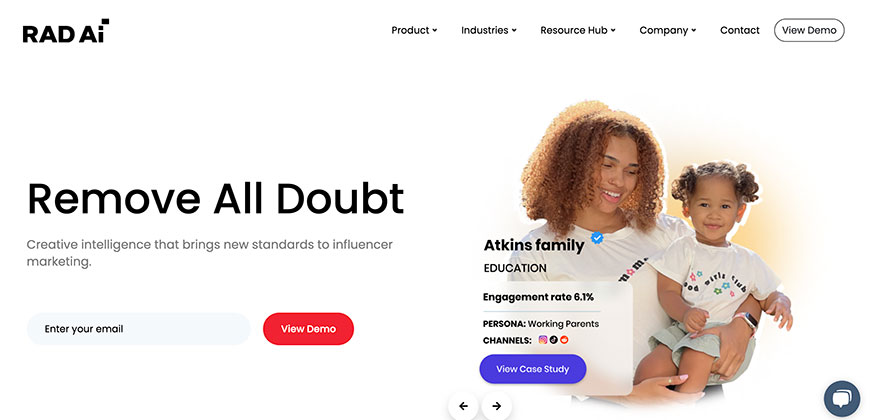
RAD AI (RAD Intel) targets marketing and influencer-content teams, using audience analysis to recommend topics, themes, and language likely to resonate with specific demographic and interest segments. Less a general-purpose writing tool, more a content-strategy layer that informs what to write.
9. ChatGPT (OpenAI)
ChatGPT is the most widely used AI writing tool in the world. Powered by GPT-4o, GPT-4 Turbo, and OpenAI’s newer reasoning models, it handles drafting, editing, summarizing, brainstorming, outlining, and rewriting at the level of a strong staff writer. The free tier covers most personal writing; ChatGPT Plus and Team subscriptions add larger context, file uploads, custom GPTs, and collaboration features. Integrates with Microsoft Office (via Copilot), Google Docs (via extensions), and most CMS platforms through plugins or API.
10. Readable
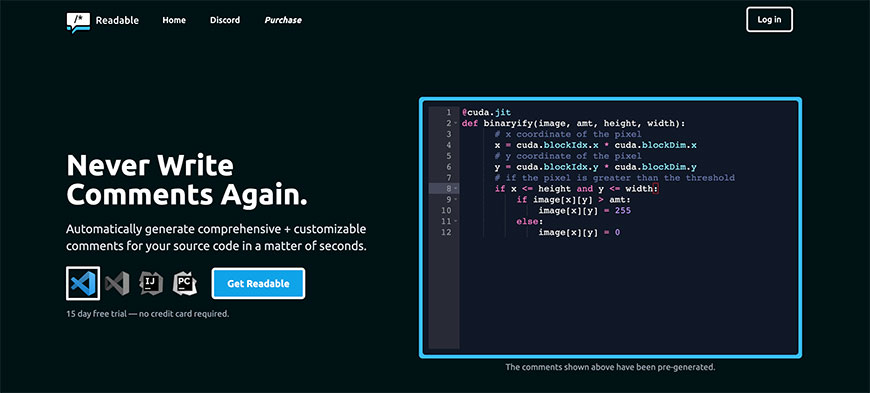
Readable scores text against multiple readability formulas — Flesch-Kincaid, Gunning Fog, SMOG, ARI, Coleman-Liau — and surfaces sentence-by-sentence improvements. Especially useful for writers targeting a specific reading-grade level for plain-language compliance, public-sector content, or Section 508 / WCAG 3.1.5 accessibility goals.
11. Lumen5
Lumen5 turns blog posts and articles into short-form videos using AI — pulling key sentences, suggesting visuals, generating captions, and producing social-ready cuts. A useful repurposing layer for writers and content marketers who want to extend article reach into video without a full production pipeline.
12. Claude (Anthropic)
Claude is Anthropic’s LLM assistant and a primary alternative to ChatGPT, particularly favored by long-form writers, editors, and researchers because of its very large context window (200K+ tokens — entire book-length manuscripts in a single prompt) and conservative tone defaults. Strong at editorial work — line edits, structural critiques, voice-matching — and at handling long source documents during drafting. Free, Pro, and Team tiers; available as a web app, desktop apps, and API.
13. Jasper
Jasper (rebranded from Jarvis in 2022) is one of the longest-running marketing-copy AI tools, with templated workflows for ad copy, blog posts, social media, and email campaigns. Brand-voice training, team collaboration, and a Chrome extension for in-context use across the web make it a fixture in mid-market content teams. Now competes with general-purpose LLMs by leaning on its workflow and brand-voice features.
14. Writesonic
Writesonic is a Jasper-style content generator with templates for blog posts, ad copy, landing pages, and product descriptions, plus its Chatsonic conversational mode and Botsonic chatbot builder. Its main hook is workflow breadth at competitive pricing — particularly attractive to small businesses and freelancers running multiple content streams.
15. ContentBot
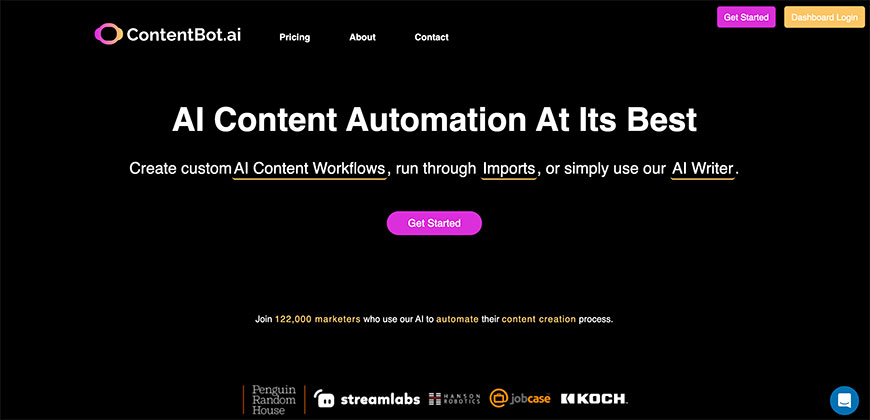
ContentBot offers AI-assisted blog drafting, paraphrasing, marketing copy templates, and a simple workflow builder for repeatable content tasks. Solid mid-tier option for solo content marketers who want a focused tool rather than a general-purpose LLM. Especially useful for SEO-driven blog production.
16. Textio
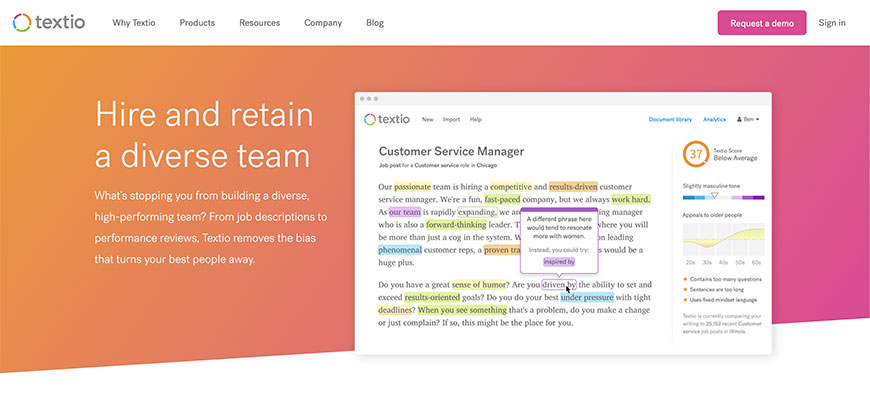
Textio specializes in talent-acquisition writing — job descriptions, recruiting emails, performance feedback — flagging biased or exclusionary language and predicting candidate-pool effects. The pivot away from generic marketing copy toward HR/people writing makes it a unique entry on this list, especially relevant for diversity, equity, and inclusion teams.
17. Phrasee
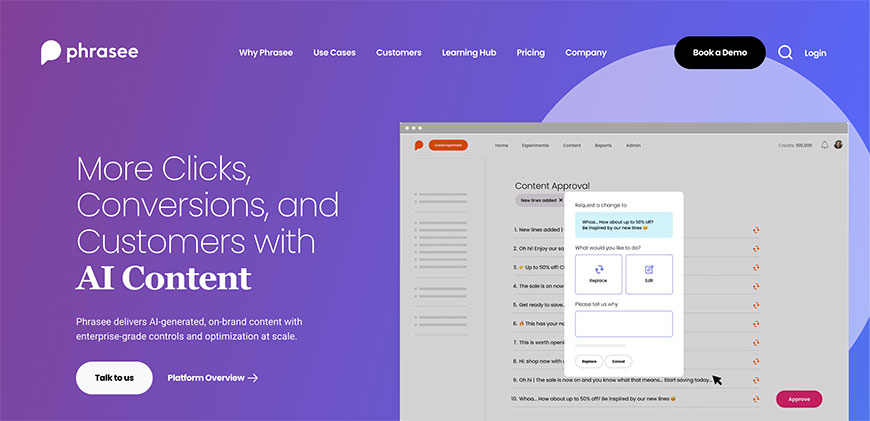
Phrasee generates and optimizes marketing language — particularly email subject lines, push notifications, and on-site CTAs — using brand-trained models and live performance feedback. Acquired by Cordial in 2024 and now offered as part of Cordial’s broader marketing platform; still available as a standalone capability for enterprise marketers.
18. Scripted
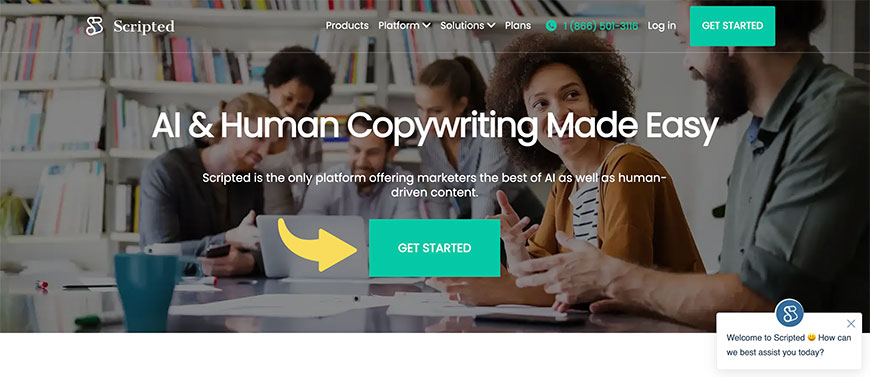
Scripted is a hybrid platform combining AI content generation with a marketplace of human writers and editors. The pitch is using AI for first drafts and scaled production while keeping a human in the loop for accuracy, voice, and final edits — appealing to brands that want AI velocity without the AI-only quality risk.
19. Article Forge
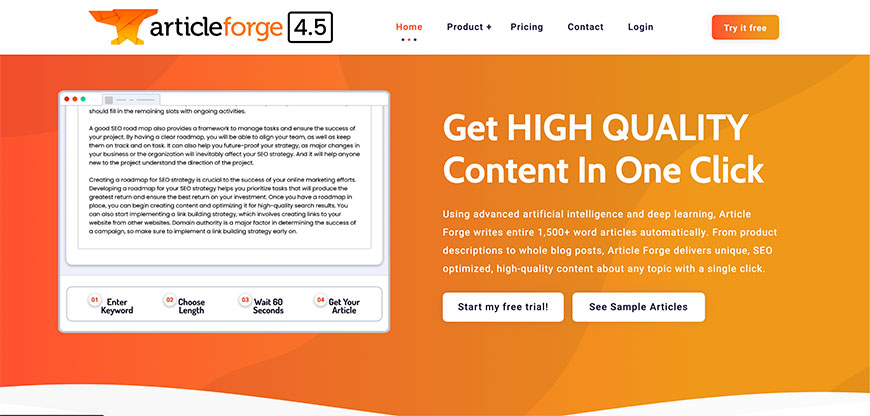
Article Forge generates long-form SEO-targeted articles end-to-end from a keyword input. Best paired with significant editing — bulk-generated articles benefit from human review, fact-checking, and on-page polish before publishing. Useful for production SEO programs that need volume but should be combined with quality controls to avoid the scaled-content-abuse pitfall flagged by Google’s 2024 Core Update.
20. Notion AI
Notion AI integrates LLM-powered drafting, summarizing, brainstorming, and editing directly into Notion documents. Particularly useful if your team already lives in Notion — meeting notes get auto-summarized, drafts get rewritten in place, and Notion AI Q&A can search and cite across your workspace. Strong at the writing-in-context use case where a general-purpose LLM in a browser tab is too far from the work.
Frequently asked questions
Can AI write entire articles I can publish without editing?
Technically yes; practically no. Modern LLMs produce fluent text that reads well, but unedited AI output regularly contains factual errors (“hallucinations”), generic framing, and the AI-tells search engines and readers increasingly recognize. Treat AI output as a first draft and edit hard.
Will AI-detection tools flag legitimate AI-assisted writing?
Often, yes. Tools like Originality.ai, GPTZero, and Copyleaks flag AI-generated patterns even in human-edited text. Their accuracy is imperfect — false positives are common, especially for non-native English writers — and Google has stated that AI detection is not part of its ranking signals. Use them as a sanity check, not a verdict.
Which AI writing tool should I start with?
For most writers and small businesses: ChatGPT or Claude for general drafting and editing, plus Grammarly for in-line correction and tone. For SEO-driven content production: add Yoast SEO and a long-form generator like Jasper or Writesonic. For academic writing: Writefull. For UX and reading-level checks: Hemingway or Readable.
Are AI writing tools safe to use with confidential content?
Depends on the tool and tier. Free consumer-grade tools (default ChatGPT free, default Claude free) often retain prompts for training unless you opt out. Enterprise tiers (ChatGPT Enterprise, Claude for Work, Microsoft Copilot 365, Notion Enterprise) typically include data-protection and no-training contractual commitments. For regulated industries or proprietary work, use the enterprise tier.
How is AI writing pricing changing in 2026?
The trend is consolidation toward subscription bundles. Standalone marketing-copy generators face pressure from general-purpose LLM assistants that can do the same work at a similar price; specialized tools (Grammarly, Hemingway, Writefull, Textio, Phrasee) compete on workflow and integration depth rather than raw generation. Expect more “AI features included” rather than separate AI tool subscriptions in the existing tools you already pay for (Microsoft 365, Google Workspace, Notion).
The bottom line
The AI writing tools market in 2026 is bipolar: a few extremely capable general-purpose LLM assistants (ChatGPT, Claude, Gemini, Microsoft Copilot, Notion AI) sit alongside a dense ecosystem of specialized tools focused on specific writing tasks (Grammarly for correction, Yoast for SEO, Hemingway for readability, Jasper and Writesonic for marketing workflows, Phrasee for marketing copy optimization). Most professional writers and content teams use 2-4 tools together rather than picking one; the right combination depends on what kind of writing you do, where you do it, and how much editorial oversight you can afford to skip.