
What to Look for in a Plagiarism Tool
Before jumping into the list, a few criteria worth keeping in mind. Not every tool suits every use case.
- Source coverage — does it scan just the open web, or also academic papers, journals, and published books?
- AI-content detection — increasingly a separate feature, and now table stakes for serious checkers.
- Document privacy — does the tool store your uploaded text? For confidential or unpublished work, that matters.
- Pricing model — per-word, per-document, flat monthly, or free with limits. Light users want different terms than a newsroom running ten checks a day.
- Integrations — native plugins for Google Docs, Microsoft Word, or a CMS save real time.
1. Grammarly
Grammarly is best known for grammar and style, but its Premium plan includes one of the more polished plagiarism checkers on the market. It compares your text against 16 billion web pages and ProQuest’s academic databases, and the 2026 updates added better paraphrase detection (it catches “patchwriting” where a source’s sentence structure is lightly rearranged).
The free plan covers grammar only. Premium — where plagiarism detection lives — starts around $12/month billed annually in 2026. Browser extensions, desktop apps, and Microsoft Office/Google Docs integrations make it nearly invisible in a normal writing workflow. For students, journalists, and content teams who want grammar and originality in one pass, it’s still the default recommendation.
2. Copyscape
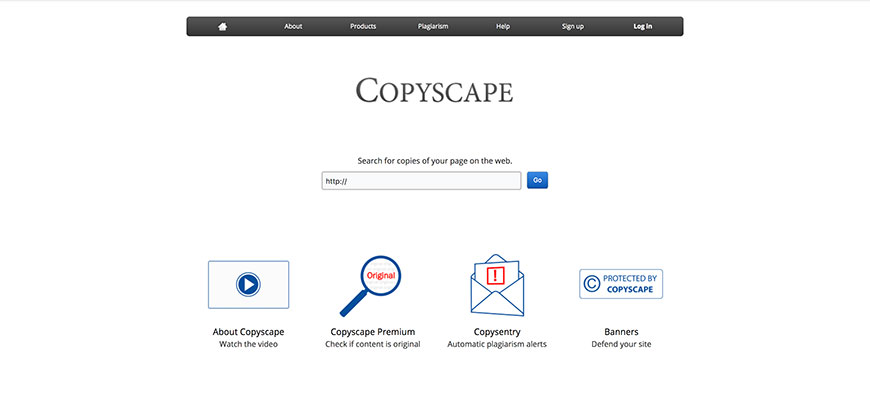
Copyscape is the elder statesman of web-content plagiarism detection — the tool most SEO teams have used for two decades to find scraped versions of their own articles. Enter a URL and Copyscape finds pages on the open web with matching content. The free version is basic; Copyscape Premium ($0.05 per search up to 200 words) adds Copysentry (automatic weekly monitoring), private comparison against your own pasted text, and bulk API access.
The interface looks like it did in 2005, but the matching engine is still reliable. For publishers protecting their own content — rather than students checking their essays — Copyscape is usually the right tool.
3. WhiteSmoke
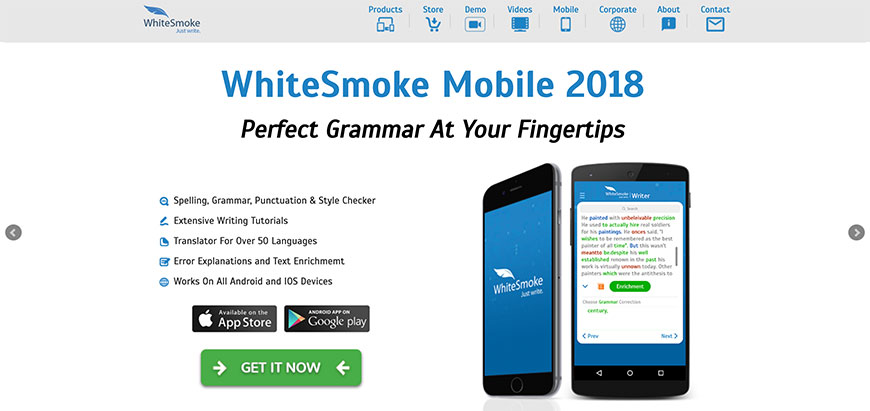
WhiteSmoke bundles plagiarism detection with grammar, style, and translation in desktop apps for Windows and Mac, plus a browser extension that works inside Microsoft Word, Outlook, and Gmail. It’s an all-in-one pick rather than a best-in-class plagiarism tool, and pricing reflects that — starting around $5/month on a three-year plan.
WhiteSmoke is a reasonable choice if you want one subscription covering grammar, writing guidance, and plagiarism together. For a plagiarism-only need, one of the dedicated tools below will be more accurate.
4. Copyleaks
Copyleaks has become one of the most-recommended plagiarism checkers in the 2026 landscape, particularly because it pairs traditional plagiarism detection with a strong AI-content detector. It claims 99%+ accuracy on AI-generated-text identification and flags paraphrased, translated, and source-code plagiarism alongside standard text matches.
Pricing is credit-based, starting around $8/month for 100 pages of scanning, with enterprise tiers for publishers, universities, and LMS integrations (Canvas, Moodle, Google Classroom, Microsoft Teams). For teams that need both plagiarism and AI detection in one tool, Copyleaks is often the shortest path.
5. Turnitin
Turnitin is the institutional standard in education. Founded in 1998 by four UC Berkeley students, it now serves most universities worldwide and has grown (via acquisitions of Urkund, Unicheck, PlagScan, and Ouriginal) into the dominant plagiarism-detection company. Its 2023 launch of Turnitin AI Writing Detection put AI-content flags into the same originality report educators already rely on.
Turnitin isn’t sold directly to individual students — access goes through your institution. For teachers and academic administrators, it remains the most mature and best-integrated option. Individuals looking for an equivalent should use one of the other tools on this list; Turnitin has stopped offering consumer products since it discontinued WriteCheck in 2020.
6. Quetext
Quetext is a clean, fast, consumer-friendly checker. The free tier lets you scan up to 500 words; Pro ($9.99/month) lifts that and adds a DeepSearch scan (contextual matching, not just verbatim) plus citation assistance. It also added an AI-content detection feature in 2023 that runs alongside plagiarism scans.
For a student or freelancer who wants a straightforward “paste and check” tool with no steep learning curve, Quetext is one of the cleanest picks.
7. Plagiarisma
Plagiarisma is a free online checker that stands out for supporting 190+ languages — useful for non-English-language writers or anyone checking translated work. Paste text or upload a document and it scans Google, Yahoo, and several academic databases. A desktop and Android app are also available.
The interface is dated and ads are plentiful, but for a free multi-language option with no account required, it still has a niche. Don’t upload confidential content — the privacy posture is nowhere near modern tools.
8. Scribbr
Scribbr’s plagiarism checker is aimed squarely at students and academic writers. It runs on Turnitin’s database (source access that most consumer tools don’t have) and reports against 99+ billion web pages and 8 million+ academic publications. It also added an AI-content detector in 2024.
Pricing is per-document rather than subscription: a standard scan on up to 7,500 words runs about $20, with larger academic documents priced higher. For students checking a single thesis or dissertation, the per-document pricing is usually cheaper than buying a month of a subscription tool. Scribbr is the natural replacement for WriteCheck, which Turnitin discontinued in 2020.
9. Originality.ai
Originality.ai is the tool of choice for publishers and agencies who care equally about plagiarism and AI-generated content. It was built for the post-ChatGPT era: one scan returns both a plagiarism score and an AI-content probability, and it claims up to 99.5% accuracy on detecting text from GPT, Claude, Gemini, and major open-source models.
Pricing is credit-based (roughly $0.01 per 100 words scanned at entry tiers), with team dashboards and API access for high-volume users. For content agencies, SEO teams, and editors dealing with freelance submissions, it has become one of the most practical choices in 2026 — and it’s the natural replacement for the now-shuttered PlagScan.
10. iThenticate
iThenticate is Turnitin’s offering for research, publishing, and legal organizations. It scans against a corpus of 97+ million published works, millions of academic papers, and the open web, and its Similarity Reports are the standard deliverable attached to manuscript submissions at most major journals.
Pricing is per-document (a single 25,000-word check is around $100) or enterprise licensing for publishers and law firms. It’s not the tool for a student checking an essay, but it’s the right tool for researchers and editors who need defensible, audit-ready reports.
11. Viper
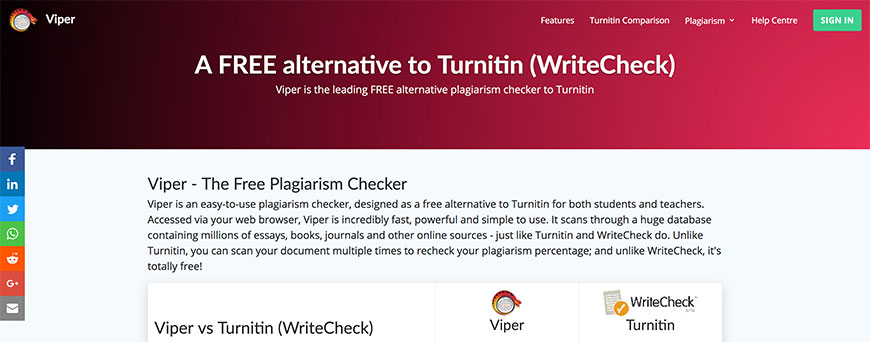
Viper (from ScanMyEssay) positions itself as a free alternative to Turnitin. You download a desktop app and submit your work from there; the scan runs against billions of web sources and returns a similarity report. Free tier is usable; paid plans add faster scans and multi-document support.
One caveat that’s been flagged over the years: Viper’s terms have at times allowed submitted essays to be added to their public essay database after a waiting period. Read the current terms before uploading anything you plan to submit as original work yourself.
12. CheckForPlagiarism.net
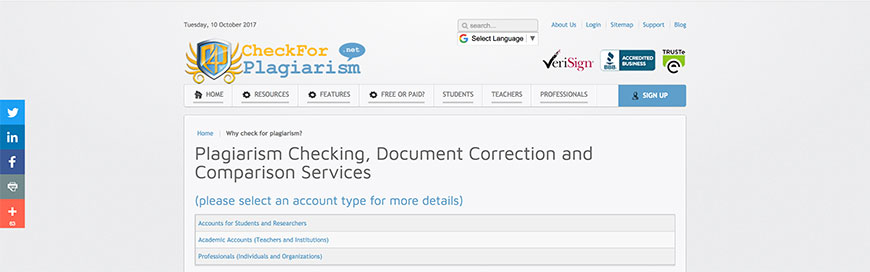
CheckForPlagiarism.net has been around since 2004 and targets students, researchers, and professionals. It scans academic publications, journal archives, and the open web, and offers separate student ($25) and professional ($40+) tiers. Reports include per-source similarity breakdowns and exportable PDF summaries.
It’s not as polished as Copyleaks or Grammarly, but it’s a solid mid-tier option for users who want reports formatted for institutional or legal review.
13. Duplichecker
Duplichecker is the budget free option on this list. The free tier allows up to 1,000 words per scan with no signup required — drop in text, click check, get a similarity report in seconds. Premium ($10/month) lifts the word limit and removes ads.
Source coverage is narrower than premium tools, and ad-heavy free pages can feel cluttered. But for bloggers, small businesses, and students doing occasional checks on short content, it’s a reasonable zero-cost entry point. We previously recommended SEO Tool Station’s checker here; that site has since been parked and is no longer a working tool — Duplichecker fills the same free-SEO-user niche.
14. QuillBot Plagiarism Checker
QuillBot is best known as a paraphrasing tool, but its plagiarism checker has matured into a strong option — particularly bundled with QuillBot’s writing, grammar, and AI-detection tools for one price. The Premium subscription ($9.95/month, or about $4/month annually) unlocks unlimited plagiarism scans alongside paraphrasing and citation generation.
For students and writers who already use QuillBot for paraphrasing, adding plagiarism detection in the same subscription is a natural fit. Unicheck, which held this slot in the original list, was shut down by Turnitin on January 1, 2025; QuillBot fills the affordable-consumer-tool role.
15. ProWritingAid
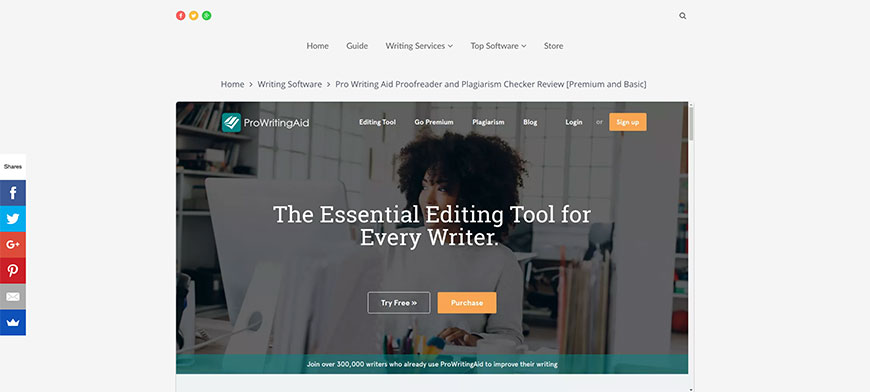
ProWritingAid competes with Grammarly for the all-in-one writing-assistant slot, and its plagiarism checker works as an add-on. Plagiarism checks are sold in bundles (100 checks for about $10, 500 for $40, and unlimited on annual Premium Pro plans).
The grammar and style analysis is arguably deeper than Grammarly’s — ProWritingAid gives long-form writers detailed reports on sentence structure, pacing, and repetition. If you care more about writing craft than the smoothest possible UI, it’s worth a look.
Plagiarism Detection in the Age of AI
The biggest shift since this list was first written is the rise of AI-generated content. Every serious tool on the list now includes AI-content detection alongside traditional plagiarism matching — Copyleaks, Originality.ai, Grammarly, Scribbr, Quetext, and QuillBot all flag text that looks machine-written. Accuracy isn’t perfect; false positives on human writing do happen, especially on short or generic text.
For teams managing duplicate content on their own sites or writers working in Google’s Helpful Content era, treating AI detection as a companion check — not a verdict — is the right posture. Use it to catch unattributed copy-paste jobs; use editorial judgment for borderline cases.
Frequently Asked Questions
What’s the best plagiarism checker in 2026?
There isn’t a single best answer — it depends on use case. Copyleaks and Originality.ai lead for content teams that also want AI-content detection. Turnitin (via your institution) is still the academic standard. Grammarly and QuillBot are the best all-in-one picks for individual writers. Copyscape remains the go-to for publishers checking if their own content has been scraped elsewhere.
Can plagiarism checkers detect AI-generated content?
Modern tools flag both plagiarism and AI authorship as separate signals. Copyleaks, Originality.ai, Grammarly, Scribbr, Quetext, and QuillBot all include AI-content detection in 2026. Accuracy varies — treat the score as an input to editorial review, not a verdict. False positives on short or templated human-written text are a known issue across every tool.
Are free plagiarism checkers accurate?
Free tiers are fine for short, low-stakes text — a 500-word blog post, a short essay draft. They generally scan a smaller set of sources than paid tools, and many (Duplichecker, Quetext, Plagiarisma) cap word count per scan. For dissertations, professional publications, or legal work, a paid tool with academic-database access is worth the cost.
Why did Turnitin buy WriteCheck, PlagScan, and Unicheck?
Turnitin has spent the last few years consolidating the plagiarism-detection market, acquiring Urkund in 2019, Unicheck in 2020, and Ouriginal (which itself merged Urkund with PlagScan) in 2021. WriteCheck was Turnitin’s own consumer product and was discontinued in June 2020. PlagScan reached end-of-life on January 1, 2026; Unicheck was shut down on January 1, 2025. Customers of those products were migrated to Turnitin’s main platform.
Bottom Line
The plagiarism-tool market in 2026 is smaller than it was in 2018 — several names are gone — but the survivors are considerably more capable. Pick by use case: Grammarly or ProWritingAid if you want writing assistance and plagiarism in one subscription, Copyscape if you’re protecting your own published content, Copyleaks or Originality.ai if AI-content detection matters, and Turnitin or iThenticate if you’re working inside an academic institution. Run anything important through at least one tool before it goes public — mistakes caught at draft stage cost nothing; the same mistakes after publication can cost a lot more.