
Top 10 Backlink Checker Tools for SEO
- Last Edited April 18, 2026
- by Garenne Bigby
Marketing a website for free is possible if you have strong search visibility — and strong backlinks are one of the most important drivers of that visibility. Backlinks remain a top-3 Google ranking signal in 2026, even as AI Overviews and generative search reshape how clicks happen. Knowing which sites link to you, which links are worth keeping, and where your competitors are earning links is foundational SEO work.
Your first stop should be Google Search Console — it’s free, it’s Google’s own data, and the Links report shows who links to you and which pages get the most inbound links. After that, you need a dedicated backlink tool for competitor research, link-building opportunities, and ongoing monitoring. Here are 10 tools worth knowing about, from the two dominant platforms (Ahrefs and Semrush) to niche options that do specific jobs well.
For a broader look at SEO strategy, see our guide on realistic SEO timelines — and if you’re new to link attributes, nofollow, sponsored, and ugc is the reference on how Google treats different link types.
1. Moz
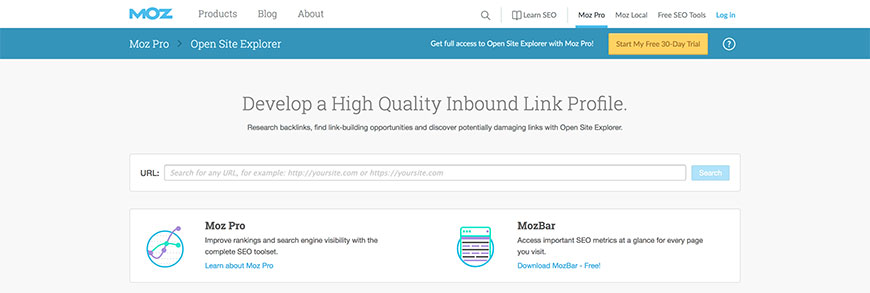
Moz is one of the original SEO tool vendors — the company literally coined the term “Domain Authority.” Its backlink tool, Link Explorer, gives you an overview of inbound links, anchor text distribution, spam score, and the Domain Authority (DA) and Page Authority (PA) of linking sites.
Moz’s strengths are its user-friendly interface and the ubiquity of DA as an industry shorthand metric. Where Moz lags: its link index is smaller than Ahrefs or Semrush, and fresh links can take weeks to show up. It is a solid pick for small teams, agencies pitching DA numbers to clients, and anyone wanting straightforward reports without a steep learning curve.
Pricing (2026): Moz Pro plans start at $49/month (Starter tier) with a 30-day free trial. Medium ($99/mo) and Large ($179/mo) tiers expand link and keyword limits.
2. Monitor Backlinks
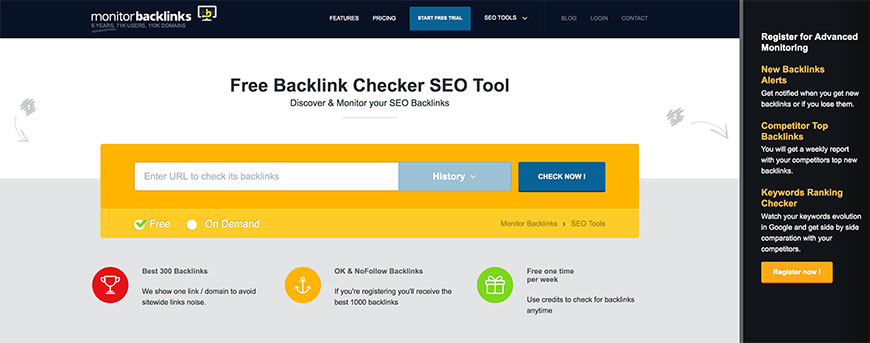
Monitor Backlinks was one of the earliest dedicated backlink tracking tools, and it has since been integrated into cognitiveSEO, a broader SEO suite focused on link risk and recovery. It monitors backlinks you specify — notifying you when a link goes missing, changes to nofollow, or shows signs of being a negative SEO attack.
The cognitiveSEO parent tool adds visual link graphs, unnatural link detection, and penalty recovery workflows. If you have ever been hit by a Google manual action or are worried about low-quality inbound links, this is the tool for surgical cleanup. Not the best pure discovery tool (Ahrefs and Semrush have larger indexes) — but it shines for link risk management.
Pricing: cognitiveSEO plans start around $129/month. A 7-day free trial is available.
3. SEO Review Tools
SEO Review Tools is a collection of free single-purpose web tools, including a Valuable Backlinks Checker that grades each inbound link on its likely SEO value. It is a no-account-needed option for quick checks — paste a URL, get a summary of top backlinks with domain authority and contextual scores.
It is not a replacement for a real backlink tool. The free tier is rate-limited, and the data comes from third-party APIs rather than a proprietary index. But for spot-checking a competitor’s best links or doing a quick sanity check on your own profile, SEO Review Tools does the job fast and free.
Pricing: Free tier with daily limits; Premium plans from $19/month for higher limits and advanced tools.
4. Semrush
Semrush is one of the two dominant SEO platforms (alongside Ahrefs) and, by several independent link-database comparisons, currently has the largest backlink index in the industry — around 43 trillion links from 390 million referring domains, refreshed every 15 minutes. Its Backlink Audit tool also assesses toxicity and lets you build disavow files directly from the dashboard.
Beyond backlinks, Semrush bundles keyword research, site audits, rank tracking, content marketing tools, and competitive intelligence — which is why most agencies end up on Semrush, Ahrefs, or both. If you want one tool to do everything, Semrush is the usual answer.
Pricing (2026): Pro $139.95/month, Guru $249.95/month, Business $499.95/month. Free Backlink Checker available without signup.
5. Majestic
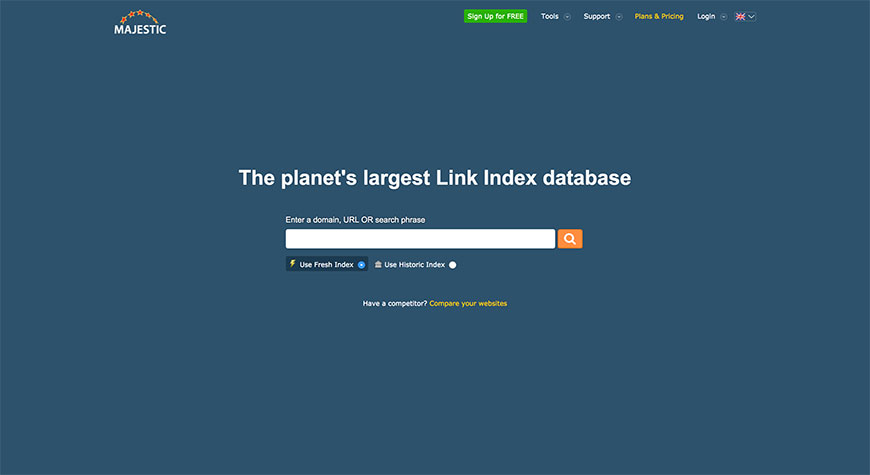
Majestic focuses almost exclusively on backlinks and has done since 2004 — longer than most of its competitors. Its signature metrics are Trust Flow (link quality) and Citation Flow (link quantity), which together give a more nuanced view of link profile quality than raw DA or DR scores. The Topical Trust Flow breakdown shows where your trusted links come from by subject area.
Majestic’s Historic Index holds link data going back years, which is invaluable for forensic analysis — spotting link patterns that led to past ranking drops, or evaluating the long-term link-building trajectory of a competitor. It lacks the all-in-one breadth of Semrush or Ahrefs but is often the backlink tool of choice for SEOs doing deep link research.
Pricing: Lite $49.99/month, Pro $99.99/month, API $399.99/month.
6. Linkody
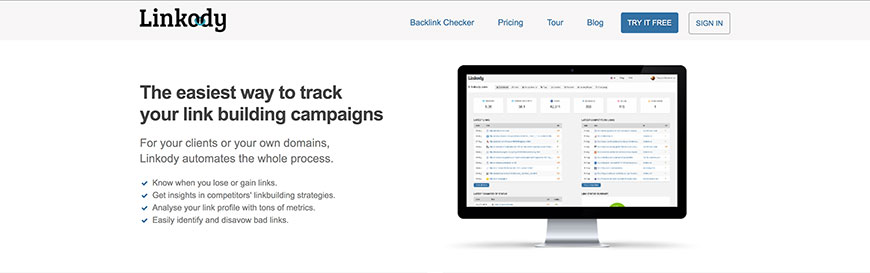
Linkody is a smaller European-based tool focused on ongoing backlink monitoring rather than discovery. You feed it the links you care about (or let it import them from Google Search Console), and it watches for status changes — link removals, nofollow additions, anchor text changes, and new referring domains.
It is not a tool for finding new links. It is a tool for keeping track of the ones you have already earned. For outreach-heavy sites, agencies tracking client campaigns, or anyone running active link-building, Linkody is a useful specialized complement to a larger platform.
Pricing: Webmaster plan €14.90/month, Advanced €24.90/month, Pro €49.90/month, Agency €79.90/month.
7. BuzzSumo
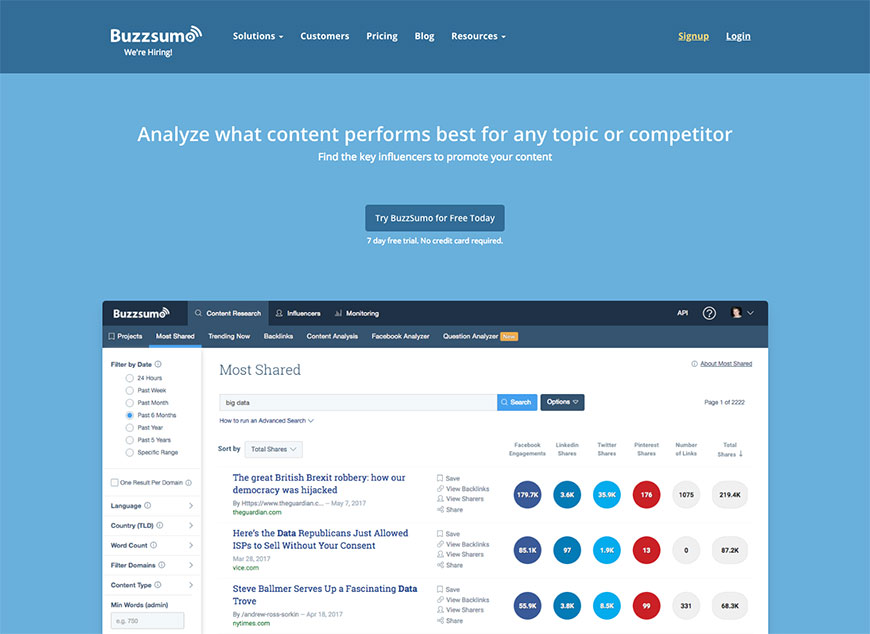
BuzzSumo came out of content marketing, and its Backlink Analyzer reflects that angle: alongside link data, you see social shares and engagement for each linking URL. That makes BuzzSumo particularly useful for finding content that earned both links and social traction — the kind of content you want to study or replicate.
BuzzSumo also offers real-time alerts for brand mentions, competitor activity, new content in your niche, and incoming backlinks. If your link-building strategy is content-led (digital PR, skyscraper content, trend-jacking), BuzzSumo is a natural fit.
Pricing: Content Creation $199/month, PR & Comms $299/month, Suite $499/month, Enterprise $999/month.
8. Ahrefs
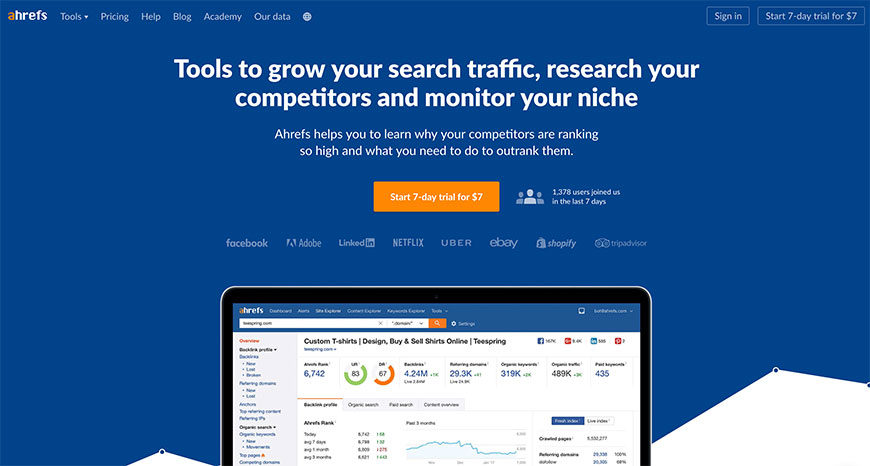
Ahrefs is the other half of the Semrush/Ahrefs duopoly, and its reputation was built on backlink data. Its live index holds roughly 35 trillion external backlinks from 494 million domains, with new links discovered every 15–30 minutes. Ahrefs’ Domain Rating (DR) has become the industry’s most-used link-authority metric.
The Site Explorer, Content Explorer, and Link Intersect tools make Ahrefs especially strong for competitive research — spotting where competitors earn their best links, then reverse-engineering the outreach strategy. Ahrefs and Semrush often find different subsets of the same site’s backlinks, so serious agencies run both.
Pricing (2026): Lite $129/month, Standard $249/month, Advanced $449/month, Enterprise $1,499/month. Free tools available (Ahrefs Webmaster Tools for verified domains).
9. SEOkicks
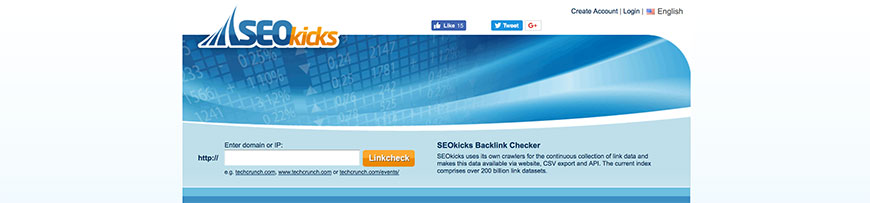
SEOkicks is a German-run backlink checker with its own proprietary crawler and index — now containing over 200 billion link datasets. Its web interface is available in English and its API returns data in XML or JSON format. The appeal: an alternative link index independent of Ahrefs or Semrush, which sometimes surfaces links the major platforms miss.
SEOkicks is particularly popular in German-speaking markets but is usable for any site. For sites operating outside the US/UK where the big platforms’ coverage can be thinner, it’s a useful second opinion.
Pricing: Free tier for basic checks on the website. API access starts at €9.90/month for small volumes, with higher tiers for agencies and tools integrations.
10. SEO SpyGlass
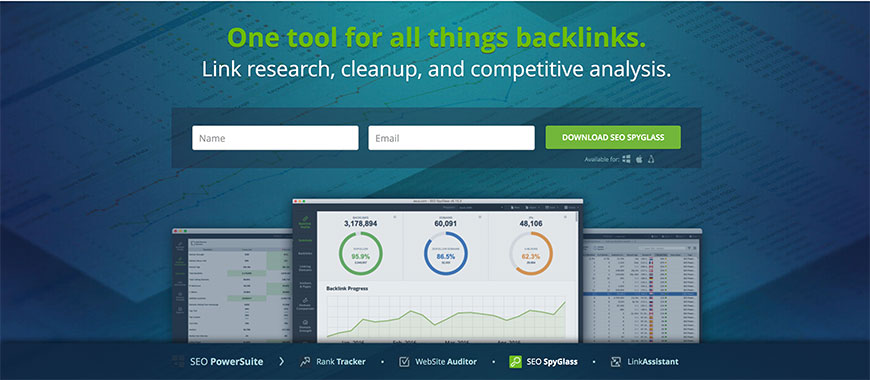
SEO SpyGlass is part of the SEO PowerSuite bundle from Link-Assistant.com — a desktop-based SEO toolkit that has been around since the mid-2000s. It runs locally on your computer rather than in the browser, which means unlimited checks without API rate limits, and no per-month subscription creep.
SpyGlass checks backlinks, cleans up broken or low-quality inbound links, and runs competitor analyses with white-label reports. The desktop model is unusual in 2026 (most SEOs prefer cloud SaaS) but has its fans — particularly agencies managing dozens of clients who want to cap tool costs.
Pricing: Free tier with basic features; Professional $124.75/year (standalone), or $299/year for the full SEO PowerSuite bundle.
Frequently Asked Questions
What is the best free backlink checker?
Google Search Console is the best free option for your own site — it’s Google’s own data, shows who links to you, and highlights your most-linked pages. For competitor research on a budget, Ahrefs’ free Backlink Checker, Semrush’s free tier, and SEO Review Tools all give a sample of a domain’s top backlinks without signup.
Which backlink checker is the most accurate?
No single tool is comprehensively “correct” — every tool crawls and indexes independently, so results differ. Independent comparisons show Semrush and Ahrefs find the most links overall, with Semrush edging ahead on most sites (Semrush discovered more links on 87% of domains in one 2025 comparison). Majestic often surfaces historic links the newer tools miss. For critical work, run two tools and merge results.
How often should I check my backlinks?
For most sites, a full backlink audit every 3–6 months is enough, with a quick check after major content launches or when you see ranking changes. Ongoing monitoring tools like Linkody or Monitor Backlinks catch link changes between audits. If you have ever had a Google penalty, check monthly.
Do backlinks still matter in the AI Overviews era?
Yes — and arguably more. AI Overviews and generative search engines use the same underlying web index and ranking signals to decide which sources to cite. Authoritative sites with strong backlink profiles are more likely to be cited in AI answers, not less. The mechanics of what backlinks do have not changed; the SERP around them has.
Bottom Line
For most teams in 2026, the honest recommendation is: use Google Search Console for free monitoring of your own links, then pick Ahrefs or Semrush as your primary platform. Add Majestic if you need deep link quality analysis or historical data. Layer in specialized tools (Linkody for monitoring, BuzzSumo for content-led outreach, SEOkicks for non-US indexes) as your needs get more specific.
Whichever tools you choose, remember the underlying goal is not to collect backlinks — it is to build a link profile that reflects genuine editorial trust in your site. That’s what Google’s ranking systems reward, and what AI systems cite. For how backlinks fit into the broader SEO landscape, our overview of the history of SEO and search engines traces how link signals became central to search — and where they go next.