
The Top 14 URL Shorteners to Shorten Long Page URLs
- Last Edited April 18, 2026
- by Garenne Bigby
Have you ever tried to post a URL to a social media site or elsewhere and been frustrated by how long the link was? That is where a URL shortener helps. Plenty of URL shortener tools live online and will handle the job automatically — figuring out which one fits your workflow is the hard part. Here is a list of the top 14 URL shorteners for 2026 that you may find helpful. When using any online tool, it is important to find the one that is right for you.
What is a URL shortener?
Links can be long, complicated, and difficult to track. A URL shortener is a tool that takes your link and makes it your own, often by wrapping it in your brand’s custom domain. Most URL shorteners also report who is clicking, where they came from, and when — which you can pair with a tool like our backlink checker roundup when planning campaigns. Keeping track of that data is one way to grow the visitors to your site.
What are the benefits of a URL shortener?
You might think shortening a URL is an extra step, but it is a useful one. Shortened links look cleaner, carry your brand, and fit in places with tight character budgets. Take X (formerly Twitter), for example — 280 characters is still not much room when you have something to say.
A short link can also make readers feel more comfortable clicking. Random long URLs look like spam; branded short links feel trustworthy. The right shortener even tends to nudge click-through rates upward.
Top 14 URL Shortener Tools
1. Bitly
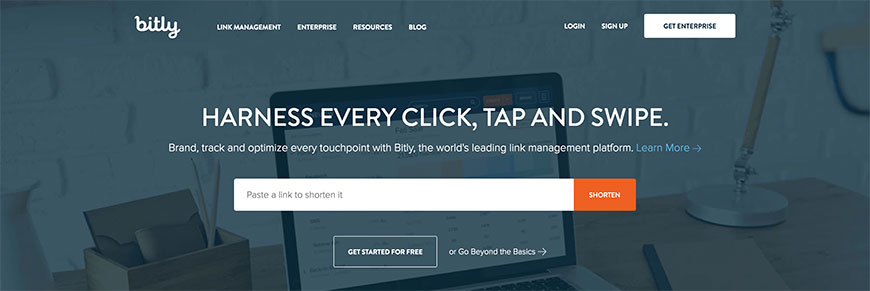
Bitly is one of the most popular URL shorteners on the internet and has grown into a full link management platform — branded domains, QR codes, deep analytics, and team collaboration. Whether you are shortening for social posts, email campaigns, or mobile apps, Bitly helps you track performance and reinforce your brand.
Launched in 2008, Bitly is used by Fortune 500 companies and thousands of smaller teams. The free plan is narrow — roughly 10 custom links per month plus an interstitial ad shown to clickers — so most teams move to a paid tier, starting around $10 per month when billed annually. You can sign up with email or Google SSO.
2. URL Shortener by Zapier
URL Shortener by Zapier is a simple tool that creates shortened links redirecting to longer URLs, designed to slot into your automation workflows. You can shorten URLs for social sharing, email marketing, and other purposes, and chain the shortener into Zaps alongside Google Sheets, Slack, and thousands of other Zapier-connected apps. For teams that already rely on Zapier, it is the most frictionless way to add short-link creation to existing automations.
3. TinyURL.com
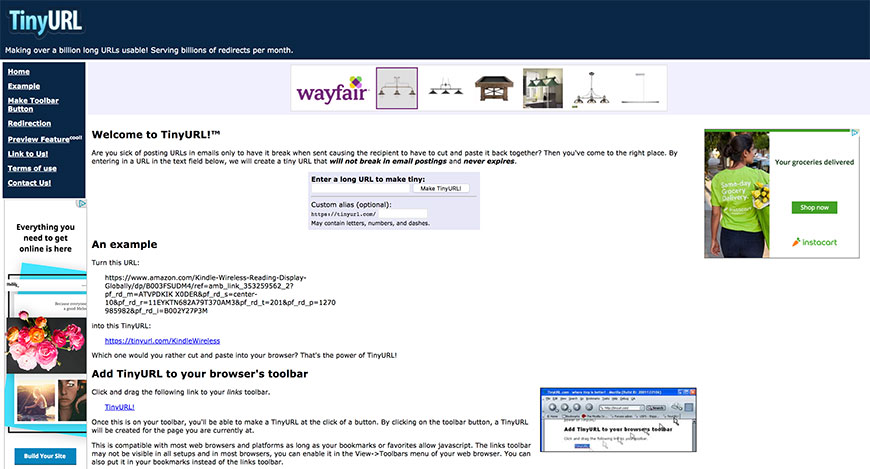
TinyURL.com is another long-standing tool for shortening links. Launched in 2002, it is one of the oldest URL shorteners still in active operation — paste a URL and get a short link immediately, no account required. You can also customize the last few characters to stay consistent with your branding, or add TinyURL to your browser’s toolbar for one-click use.
The free tier stays usefully generous, and the links never expire. Paid plans add branded short domains, detailed analytics, and API access — so TinyURL now serves both casual users and teams that want a full link-management layer.
4. Ow.ly
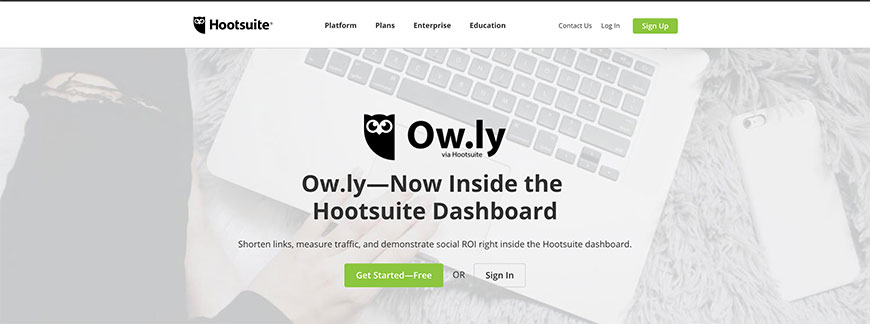
Ow.ly is best known as Hootsuite’s built-in URL shortener. It lives inside the Hootsuite dashboard, so every link you schedule or post through Hootsuite can be shortened and tracked without leaving the tool.
You cannot buy Ow.ly on its own — it is bundled into every Hootsuite plan at no extra cost. The free Hootsuite plan gets you the shortener with basic stats; paid Hootsuite plans add full link analytics and social publishing features. If you already run Hootsuite, Ow.ly is effectively free; if you do not, the right question is whether Hootsuite itself fits your workflow.
5. Is.gd
Is.gd is the no-frills option on this list. Bookmark its homepage and you have a one-click shortener at hand. It is one of the fastest tools for pure shortening, with no signup required, and it can also generate a QR code for a shortened link — useful for business cards, print ads, or anywhere you want someone to scan straight to a page.
You can preview any Is.gd link before clicking to see its statistics. Links are permanent — once created, they do not expire or change. You can also customize the end of each link to keep it on-brand. For anyone who just needs short links without a dashboard, Is.gd stays a solid pick.
6. Buff.ly
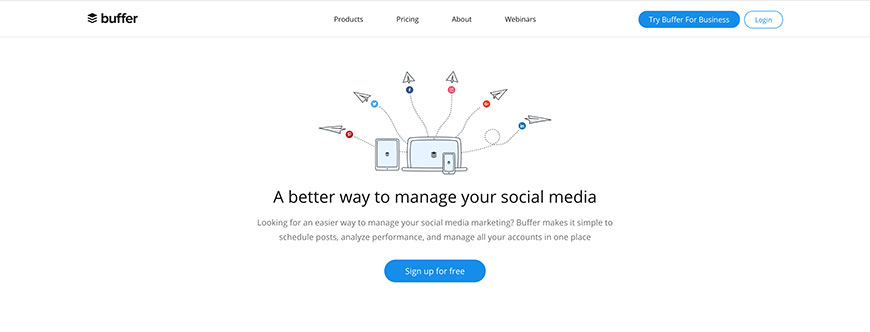
Buff.ly is the URL shortener built into Buffer, a popular social media scheduling tool. Shorten and schedule links in one flow, then publish them across your connected channels at the times you choose — ideal if social posting is your main use case for short links.
Buffer supports the major networks, including Facebook, X (Twitter), Instagram, LinkedIn, Threads, Pinterest, TikTok, YouTube, and Mastodon. Plans start free (three channels, limited posts) and scale up through the Essentials tier at $6 per month per channel. One note for free users: since April 2025, Buff.ly shortening is off by default on free channels — you can re-enable it per channel in your Buffer settings.
7. Linkvertise
Linkvertise is the modern successor to AdF.ly in the monetized-shortener category. AdF.ly was acquired by Linkvertise in 2022 and sunset shortly after, with existing accounts migrated via a converter tool. Shorten a link with Linkvertise and earn a share of ad revenue each time someone clicks through one of its interstitial pages.
Linkvertise uses a performance-based RPM model rather than a flat rate, which means high-quality traffic tends to earn more per click than it did under AdF.ly’s old system. Useful if your goal is to monetize shares rather than just shorten; skip it if clean, ad-free links matter more for your brand.
8. Short.io
Short.io is a branded URL shortener with a notably generous free tier: 1,000 links and 50,000 tracked clicks per month before you need to pay. Bring your own custom domain — Short.io handles the SSL automatically — and you have a professional-looking branded shortener without the enterprise price tag.
The platform adds detailed click analytics, UTM parameters, password-protected links, expiring links, A/B rotation, and a REST API. There are browser extensions for Chrome, Firefox, and Edge. For small teams that want branded links without committing to Bitly or Rebrandly pricing, Short.io is the easiest landing spot.
9. T.LY
T.LY stakes its claim on being shorter than the competition — a three-character domain means the wrapped links are among the most compact you can generate. With over 50 million URLs shortened and billions of clicks tracked, it is a mature service built for branded links, QR codes, smart links, and private analytics.
The free tier — usable through the browser extension — handles occasional, low-volume shortening without a signup. Paid plans start at $5 per month (Hobby, 500 new links) and scale up to Pro at $50 per month for 10,000 links, with custom domains, SSL, API access, and routing controls. Add a + to any short link to see its click stats instantly — a small but useful touch.
10. Rebrandly
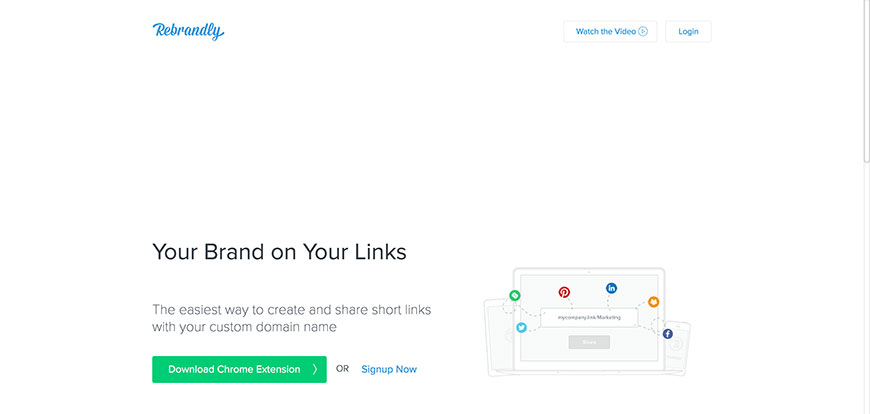
Rebrandly is built for teams that care about branded link management across multiple domains and clients. Create custom short links on your own domains, edit links after creation, and share them anywhere — Facebook, X, Instagram, LinkedIn, Pinterest. The editing ability matters: once a short link is in the wild, you can redirect it without reissuing the URL.
The free plan includes 10 links and 100 tracked clicks per month — enough for a test run. The Essentials plan starts at $14 per month for 250 links and 10,000 tracked clicks, with more generous tiers above. Rebrandly is the right pick if branded links with multiple custom domains are central to your marketing stack.
11. Cutt.ly
Cutt.ly launched in 2018 as a full link management platform, not just a shortener. Branded short URLs, QR codes, link-in-bio pages, lightweight surveys, campaign analytics with hourly heat maps, and retargeting pixels all sit in one dashboard. The free plan includes basic analytics, QR codes, and one branded domain slot — unusually generous for a free tier.
Paid plans add bot filtering, A/B rotation, team features, API access, and ad-free everything (Cutt.ly runs no ads on any plan). Pricing starts at $12 per month on the Starter tier, with the Single plan at $25 per month unlocking the full analytics suite. For marketers who want one tool for links, QR, and simple measurement, Cutt.ly hits the sweet spot.
12. Polr
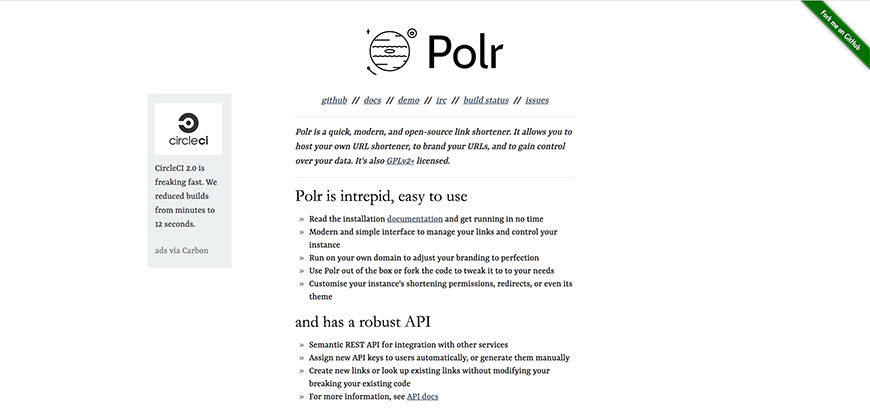
Polr is a self-hosted URL shortener — you run it on your own server, which lets you fully control the branded domain and the data. A live demo page on the project site lets you try it before committing. For developers comfortable with PHP and a MySQL database, Polr is a lightweight starting point with analytics built in.
That said, development has slowed — the most recent release (v2.3) shipped in January 2021, so Polr is best treated as a stable-but-dormant option rather than active software. If you want a more actively maintained self-hosted shortener, see YOURLS at #14 on this list.
13. BL.INK
BL.INK is the enterprise-leaning URL shortener that acquired BudURL and now serves as its successor platform. It is used by Fortune 500 companies for branded link management, team workflows, QR codes, and GS1 Digital Link-ready dynamic mobile microsites — the kind of infrastructure large retailers need for packaging and omnichannel campaigns.
Pricing starts at $13 per month for the entry tier and jumps to $69 per month for the professional tier, with enterprise pricing available on request. BL.INK does not offer a free plan — it is built for paying teams that need reliable branded links at scale, not occasional hobbyists.
14. YOURLS
YOURLS — Your Own URL Shortener — is the de facto open-source, self-hosted shortener. Free, PHP-based, pluggable, and supported by an active community, YOURLS has powered everything from personal branded domains to WordPress.com’s legacy wp.me shortener. It requires PHP 8.1+, Apache with mod_rewrite, and MySQL or MariaDB; an official Docker image makes the install painless.
Full control over your data, detailed stats, a plugin architecture, and ongoing maintenance (updates shipped through early 2026) make YOURLS the most active self-hosted option on this list. If you want a shortener that is entirely yours — domain, database, branding — YOURLS is the one to start with.
Frequently Asked Questions
How do URL shorteners work?
A URL shortener stores your long URL in a database and generates a short, unique code. When someone clicks the short link, the shortener looks up the matching long URL and issues an HTTP redirect to the browser. Most shorteners also log the click — timestamp, referrer, approximate location — so you can see how your links perform.
Are URL shorteners safe to use?
The link itself is as safe as the tool hosting it and the destination it points to. Branded shorteners like Bitly, Rebrandly, and BL.INK run malware checks and can revoke abusive links. The bigger risk is trust: because the destination is hidden until the click, shorteners can also be used for phishing. Preview tools and the + trick (on T.LY and Bitly) let you inspect a link before clicking.
Do URL shorteners affect SEO?
Most major shorteners issue a 301 permanent redirect, which passes link equity to the destination the same way a standard redirect would. The risk is when a shortener goes dark — if the service shuts down (as with several on the earlier version of this list), every link you created through it breaks. For links that need to live forever, prefer a branded shortener on a custom domain you control, or check our guide on nofollow link attributes and how to structure links for SEO. For broader fundamentals, see our walkthrough on building a website for SEO.