
SEO vs AEO vs GEO: The Future of Web Optimization
- Last Edited April 17, 2026
- by Garenne Bigby
Introduction
The digital landscape is shifting rapidly. Traditional SEO remains essential, but new models of discovery such as AEO and GEO are changing how users find and interact with content. For UX designers, web designers, and SEOs, understanding these three approaches is critical to staying ahead of search and AI driven trends.
SEO: Search Engine Optimization
SEO improves visibility in search engine results pages. Core focus areas include:
Keywords
Align content with search queries.
On page optimization
Titles, meta descriptions, headings, content structure.
Technical SEO
Site speed, mobile responsiveness, indexing.
Backlinks
Authority and trust from reputable sites.
AEO: Answer Engine Optimization
Answer engines such as featured snippets and voice assistants favor direct, concise responses. Prioritize clarity and structure.
AEO focuses on shaping content so it is the best direct answer to a specific question. It matters because voice and conversational interfaces often surface one primary answer instead of a list of links.
Place a concise answer of 40 to 60 words near the top. Follow with a list or a table that expands on the answer. Use clear headings and add FAQPage schema where it fits.
FAQPage, HowTo, Article, Organization, and Speakable are the usual priorities. Choose the type that best matches the user task on that page.
Use natural language, short sentences, and direct phrasing. Prefer specific nouns and verbs over adjectives. Remove jargon when it does not add clarity.
Track rich result impressions, featured snippet wins, and voice led queries in search console. Review engagement on pages with question intent and watch changes after you add FAQ blocks.
SEO: Search Engine Optimization
SEO improves visibility in search engine results pages. Core focus areas include:
AI friendly layout
TLDR summary, clear headings, and key facts blocks.
Entity clarity
Consistent naming for people, companies, products, and concepts.
Citations
Link to authoritative sources to build trust and encourage model attribution.
New metrics
Track AI referrals, engaged time, and assisted conversions.
SEO vs AEO vs GEO: Side by Side
| Factor | SEO | AEO | GEO |
|---|---|---|---|
| Goal | Higher SERP rank | Direct answers | Model citations |
| Audience | Search users | Voice and quick answers | AI platforms and chat |
| Tactics | Keywords, links, technical | Schema, FAQs, concise copy | Entities, structure, key facts |
| Metrics | Rankings, clicks, CTR | Snippets, voice traffic | AI referrals, citations |
| Tools | GA4, GSC, Ahrefs | Schema.org, Q research | Log review, custom tracking |
| Future impact | Always required | Growing share | Transformational potential |
UX & Design Implications
SEO
Clean navigation, descriptive alt text, accessible patterns
AEO
FAQ blocks, definition pages, friendly microcopy.
GEO
Clear summaries, stable anchors, structured data.
Actionable Checklist
SEO Essentials
- Run a technical audit. Improve Core Web Vitals and fix crawl issues.
- Tighten on page elements. Titles, meta descriptions, headings, alt text.
- Publish based on intent. Map keywords to problems and outcomes.
- Strengthen internal linking to key pages and clusters.
- Earn links with useful assets such as reports or tools.
AEO Priorities
- Add FAQ sections and FAQPage schema where relevant.
- Place a 40 to 60 word answer near the top for each key question.
- Use lists and tables to improve scannability.
- Write in a natural and helpful tone.
- Create definition pages for core terms.
GEO Preparations
- Add a TLDR summary and a key facts list to cornerstone pages.
- Keep entities consistent across your site and schema.
- Support claims with links to primary sources.
- Track AI referral traffic and assisted conversions.
- Keep lastmod and feed updates accurate.
Conclusion:
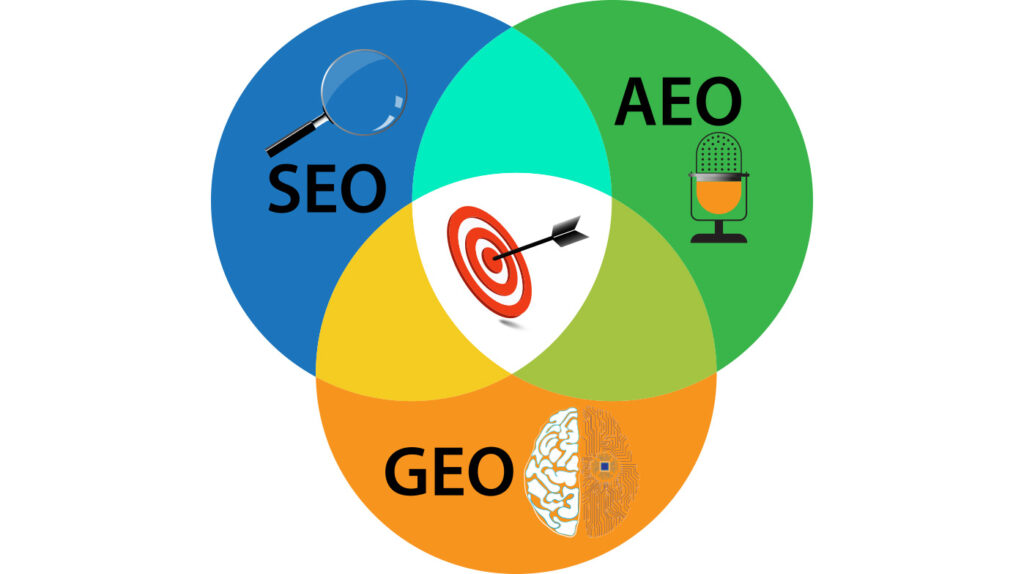
SEO, AEO, and GEO work best together. SEO keeps you visible, AEO delivers quick answers, and GEO prepares your content for AI driven discovery and citations.