
Why Track Keyword Rankings?
Rankings are the most tangible measure of whether your SEO work is paying off. Traffic and conversions are what ultimately matter, but they’re downstream — rankings move first, and watching them closely gives you a feedback loop that’s faster than Google Analytics. Beyond satisfying curiosity, tracking gives you four concrete outputs:
- A feedback loop on content changes. Did that title-tag rewrite actually help? Rankings tell you within days. Without tracking, you’re guessing whether your SEO work moved the needle or whether traffic just happened to fluctuate for other reasons.
- Early warning on drops. A sudden ten-position slide usually means a Google update, a technical issue, or a competitor move. Catching it early is the difference between a quick fix and a quarter of lost traffic. Automated alerts from most modern rank trackers will ping you before you even see the traffic dip in Analytics.
- Opportunity spotting. Keywords ranking on positions 8-15 are the highest-ROI targets for optimization work — already on page one or two, already matched to your content, just a nudge away from the top. Rank tracking tools surface these automatically; filtering to positions 8-20 is a weekly ritual for serious SEO teams.
- Competitive visibility. Watching competitors’ rankings shows you where they’re attacking and which keywords they’ve quietly dominated. If a competitor suddenly jumps from position 40 to position 3 on a commercial query, that’s a signal worth investigating — they’ve either earned links, published a much better page, or caught a favorable algorithm shift you can learn from.
What to Look for in a Keyword Ranking Tool
Not every tool suits every use case. A freelancer tracking twenty keywords for a single client has different needs than an agency managing fifty accounts. Six criteria matter most:
- Search engine coverage. Google is non-negotiable; Bing matters for B2B (especially in enterprise markets where Windows is dominant); Yahoo is mostly Bing’s index; Baidu, Yandex, and Naver matter in their regions. Most tools cover Google well; only a handful do serious multi-engine tracking.
- Location granularity. Country-level is the minimum for any serious tool. City-level or ZIP-level tracking is essential for local SEO and strongly recommended for anyone with physical presence in multiple markets. Some tools offer GPS-coordinate precision for businesses where block-by-block ranking matters.
- Device split. Mobile and desktop rank differently for the same query, sometimes dramatically — and since Google indexes mobile-first, the mobile ranking is usually the more important one. Any tool you pick should track both and let you switch views.
- Update frequency. Daily is the industry standard for paid tools; weekly is acceptable for low-priority keywords; real-time on-demand scans are a premium feature useful for competitive monitoring and quick audits.
- Historical data. At least 90 days, ideally multi-year history so you can see seasonality and algorithm-update effects. Historical charts are invaluable when diagnosing a traffic drop — they show you whether the problem started on a specific date (usually an algorithm update) or drifted over weeks (usually a competitor move or gradual content decay).
- AI-search visibility. Newer tools are beginning to track citations in Google AI Overviews, ChatGPT, and Perplexity. Still rare, worth asking about. Expect this to become standard over the next 12 months as AI citations start showing up in analytics more systematically.
1. DYNO Mapper
DYNO Mapper pairs visual sitemap generation with keyword tracking in a single tool. After crawling your site, it automatically picks up keywords from your meta tags and lets you track any additional terms by search engine and location, with daily updates. It also ties ranking data to content inventory, internal-link analysis, accessibility testing, and Google Analytics — useful when you want keyword performance in the context of the wider site, not in isolation. Plans start at $40/month for 1,000 keyword phrases, unlimited domains, daily updates, and unlimited users across every tier.
2. SEO Profiler
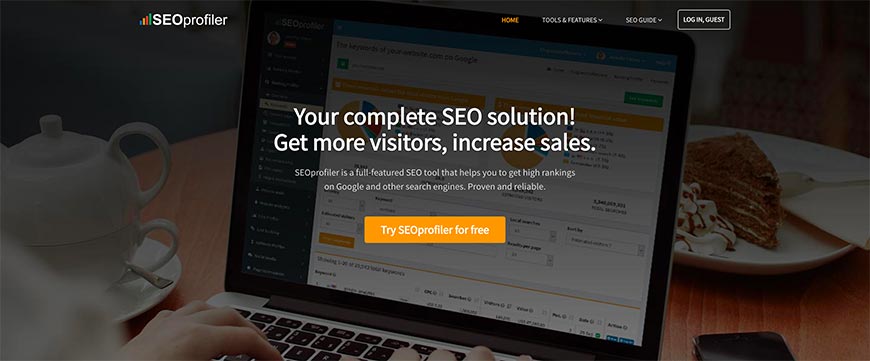
SEO Profiler combines rank tracking with competitor monitoring, backlink analysis, and an opportunity finder that surfaces keywords close to breaking into page one. Google Analytics integration means you see ranking and traffic in one place, and a built-in link-disavow tool handles Google Search Console submissions. The Opportunity Radar feature is the standout — it surfaces keywords you’re not actively targeting where you’ve drifted onto page one or two organically, which are exactly the terms worth a focused optimization pass. Plans start around $69/month for small sites, with enterprise tiers for agencies managing multiple client accounts.
3. Semrush
Semrush is one of the industry’s all-in-one SEO platforms. Its Position Tracking tool covers Google and Bing by location and device, with daily updates and competitor comparisons baked in. Keyword Magic and Keyword Gap round out the research side. Pro starts at around $140/month in 2026; most serious users are on Guru at $250.
4. AccuRanker
AccuRanker is the dedicated-rank-tracker choice used by most agencies and enterprise SEO teams. It does one thing — track rankings — and does it faster and more accurately than the broader suites. On-demand scans let you refresh any keyword in seconds instead of waiting for the daily batch; hourly refresh is available for high-priority terms. Full SERP feature tracking (featured snippets, People Also Ask, AI Overviews, Local Pack, videos) comes standard, and native integrations cover Google Search Console, Google Analytics, Looker Studio, and most major SEO suites. Pricing is keyword-based, starting around $116/month for 1,000 keywords. This slot previously covered a Google Gadgets widget that was discontinued when Google retired the Gadgets platform entirely.
5. Google Keyword Planner
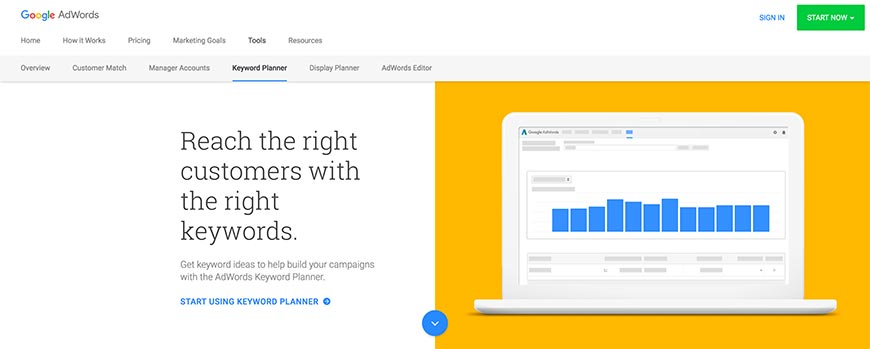
Free with a Google Ads account, originally launched as the Google Keyword Tool and Traffic Estimator. Primary use is keyword discovery and search volume estimation, not rank tracking — but it remains the ground-truth data source for search volume and closely related terms, because the data comes directly from Google’s own query logs. Volume is shown in bands when you have low ad spend and as exact numbers once you’re an active advertiser. Pair it with Google Search Console’s Performance report for your own ranking data (also free and authoritative) — between the two, you have keyword ideas and your real positions without paying for a third-party tool.
6. WooRank
WooRank produces a broad SEO review of your site plus keyword tracking and competitor comparison. The single-page site review is its signature deliverable — a color-coded, printable health report covering technical SEO, content, usability, mobile, backlinks, and rankings. Strong for agencies and consultants who need shareable, white-label PDF reports to hand to clients after each audit or monthly check-in. Automatic keyword picker surfaces terms from your content and meta tags so you don’t have to manually list every keyword you want tracked. Pro starts at $79.99/month with a 14-day free trial, and an Enterprise tier adds multi-site management for agencies.
7. Ahrefs
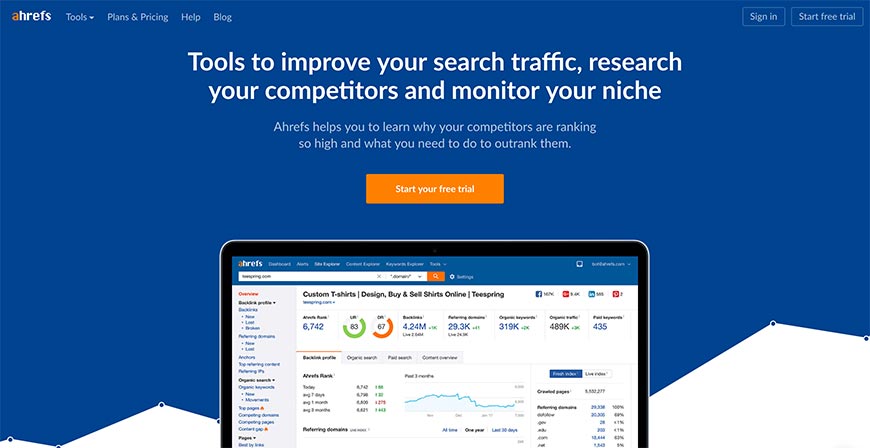
Ahrefs is best known for its backlink index but its Rank Tracker is first-class: daily updates, location/device/language targeting, SERP feature tracking (featured snippets, People Also Ask, AI Overviews), and historical data going back years. Lite starts around $129/month, Standard at $249.
8. Advanced Web Ranking
AWR is one of the longest-running rank trackers and remains popular with agencies that need flexibility over feature glitter. Cloud and desktop versions both run the same engine; the desktop option matters for teams with data-residency requirements or preference for running scans from their own infrastructure. Unlimited domain tracking is the standout — you’re not penalized for monitoring fifty competitors. Scheduled and on-demand scans, SERP feature tracking, and white-label client reports round out the package. Cloud plans start around $99/month; desktop licensing is available for agencies managing multiple clients from a single install.
9. SE Ranking
SE Ranking is a full-stack SEO platform that competes with Semrush and Ahrefs at a meaningfully lower price point. Keyword rank tracking with daily updates, site audit, on-page SEO checker, backlink monitor, keyword research, and white-label reporting all come in one subscription. Agency features include client project management, multi-user access, and branded client portals. Plans start around $65/month for 500 keywords; agency plans scale up from there with per-keyword add-ons. For teams that found Semrush or Ahrefs too expensive but still want the full feature set, SE Ranking is the go-to alternative in 2026. This slot previously covered SEO Centro, whose domain has since gone dark.
10. Similarweb
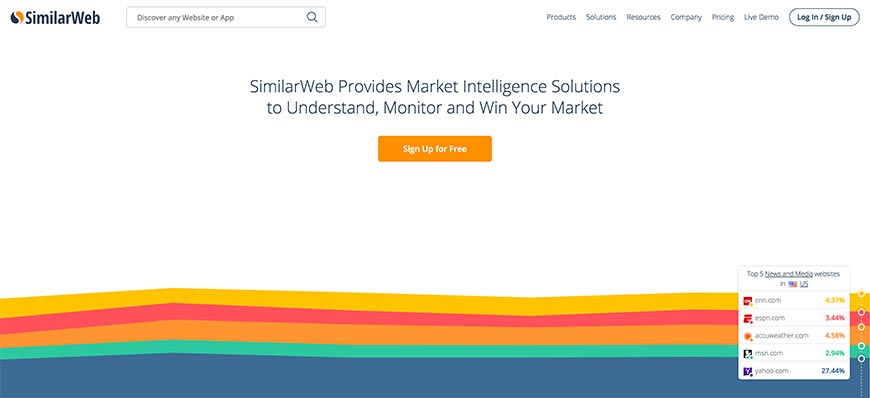
Similarweb is a traffic-intelligence platform more than a pure rank tracker — it estimates total site visits, traffic sources, audience demographics, and competitor share of voice. Where dedicated rank trackers tell you where you sit on a specific keyword, Similarweb tells you roughly how much traffic any competitor is getting overall and where that traffic comes from (direct, organic, paid, social, referral). Useful as context alongside a dedicated rank tracker, especially in strategic planning and competitive benchmarking. Free tier is limited to top-level metrics for any public domain; paid plans start in the mid-hundreds per month, with enterprise research plans in the low thousands for comprehensive market intelligence.
11. Authority Labs
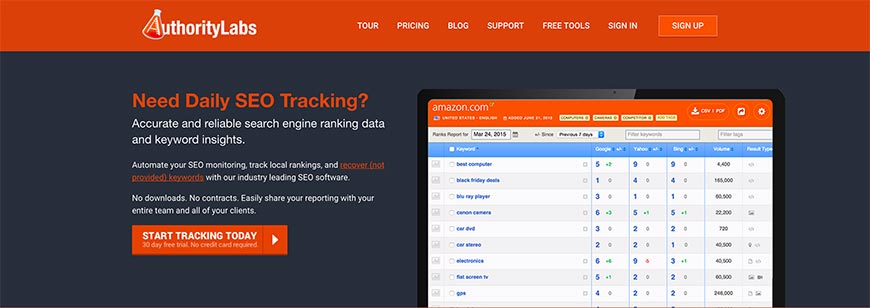
Authority Labs is a focused rank tracker with particularly strong local support — city-level and ZIP-level tracking with historical comparison going back years. It’s one of the few tools that covers image, news, video, and Local Pack results as separate tracked surfaces rather than folding them all into a single “Google” rank. PDF and CSV exports for reporting come standard. API access for high-volume users and agencies. Plans start at $49/month for small sites; Pro at $99 is the most popular tier, with Pro Plus ($225) and Enterprise ($450) for agencies and consultancies managing dozens of client accounts.
12. RankWatch
RankWatch is a cloud rank tracker plus SEO management tool with white-label options popular with agencies. Competitive keyword tracking, SERP feature monitoring, and local rank tracking included. Plans start around $29/month for small sites.
13. Moz Pro Rank Tracker
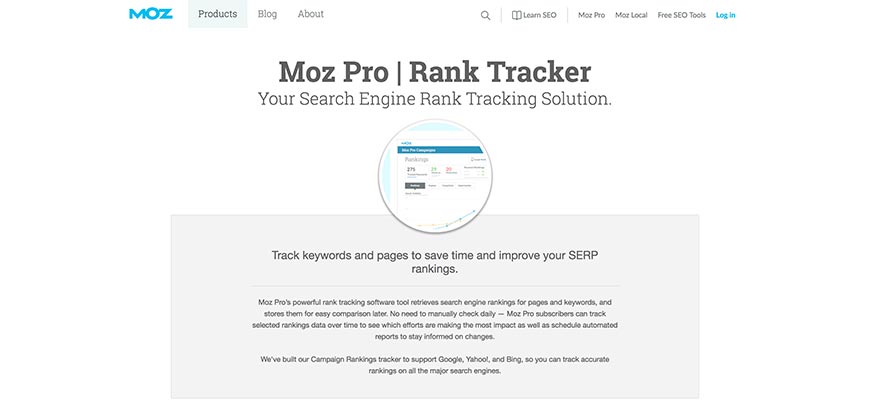
Part of the Moz Pro SEO suite, the Rank Tracker covers Google, Bing, and Yahoo by country and city. Includes Domain Authority comparison, mobile-vs-desktop tracking, and scheduled email reports. Moz Pro Standard starts around $99/month; Medium at $179.
14. Serpstat
Serpstat is an all-in-one SEO platform with rank tracking, keyword research, competitor analysis, backlink monitoring, site audit, and on-page optimization in one subscription. It’s particularly strong for European markets and has one of the broader international keyword databases. Competitor domain analysis and market intelligence features are priced comparably to Semrush’s Guru tier at roughly half the cost. Team plans with multi-user access and agency branding are available. Plans start around $59/month for Lite (up to 15 projects and 1,500 keywords tracked); bigger tiers scale up for agencies. This slot previously covered RankScanner, whose domain has since been repurposed to an unrelated Danish marketing site.
15. Nightwatch
Nightwatch is a rank tracking specialist that targets agencies and consultants who value accuracy over feature breadth. City-level geotargeting, SERP feature tracking (featured snippets, People Also Ask, Local Pack, image packs, video carousels), and a clean dashboard focused on trend analysis. It’s well regarded in local SEO circles for its city-targeting precision — if you need block-by-block accuracy for multiple locations, Nightwatch delivers without the pricing gymnastics of enterprise tools. Native Google Search Console and Google Analytics integration, custom reporting, and team collaboration features. Plans start around $39/month for 250 keywords tracked daily; agency tiers scale up from there. This slot previously covered Microsite Master, which is no longer reachable.
16. SERPWatcher by Mangools
SERPWatcher is Mangools’ dedicated rank tracker, bundled with KWFinder (keyword research), SERPChecker (SERP analysis), LinkMiner (backlinks), and SiteProfiler (domain authority metrics) in a single subscription. The unified Mangools dashboard is genuinely friendly to navigate — each tool feels like a sibling rather than a separate silo. Mobile-friendly interface with daily rank updates, Dominance Index metric (Mangools’ take on visibility across tracked keywords), and email + Slack alerts on position changes. Mangools Basic is $49/month; Premium at $69 unlocks higher limits. Pricing is attractive for freelancers and small agencies who want a complete SEO toolkit without Semrush-tier commitment. This slot previously covered the SEO Book Firefox Rank Checker, which was killed when Firefox’s legacy extension architecture was retired in 2017.
17. SERPs Keyword Rank Checker
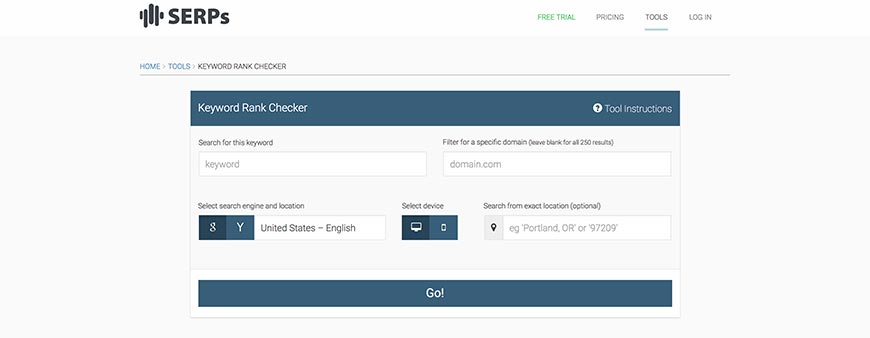
A free on-demand rank checker from SERPs.com that runs a scan in your browser and returns results in under 30 seconds. Enter a URL and keyword, pick Google or Yahoo and a location (country, region, or city), choose desktop or mobile, and get back a positional report for up to 250 competing domains. Leave the domain field blank and you get the top 250 ranking sites for that query — handy for quick competitive scans. CSV export included. Great for one-off checks, quick competitor audits, and sanity-checking another tool’s reported position; not a replacement for a subscription tracker if you’re monitoring hundreds of keywords on a recurring schedule.
18. Wincher
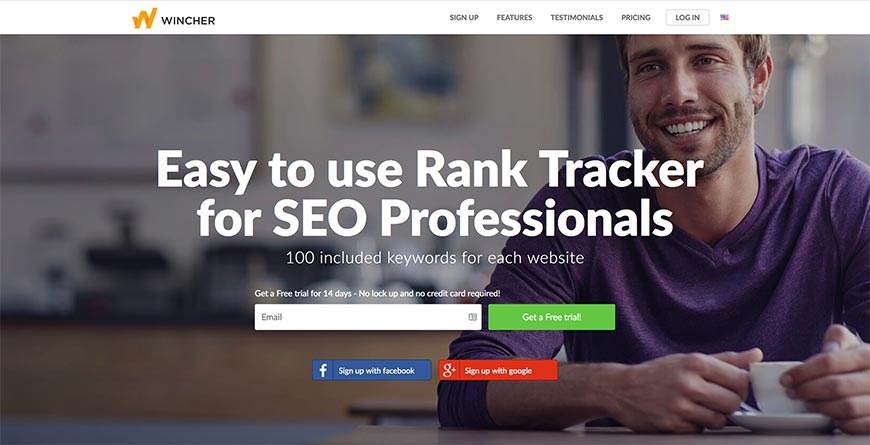
Wincher is a focused, affordable rank tracker popular with bloggers and freelancers. Daily updates, competitor tracking, notifications on position changes, and a native WordPress plugin. Plans start at $29/month for 500 keywords with a 14-day free trial.
19. Small SEO Tools
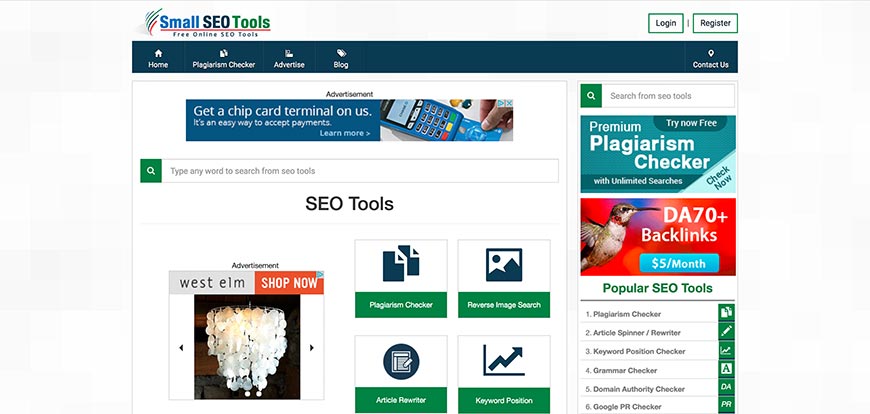
A free, ad-supported suite of SEO utilities including a basic rank checker, plagiarism checker, backlink checker, keyword density analyzer, and dozens of other point tools all indexed in a single sidebar. The rank checker accepts up to ten keywords per submission and lets you choose how many SERP pages deep to scan. Good for quick checks when you don’t need historical data, competitor tracking, or scheduled monitoring. Expect ads on every page and occasional captchas to prevent abuse; results are limited in scope but free forever — a solid bookmark for ad-hoc SEO work when you don’t want to touch a subscription tool.
20. Google Rank Checker (Search Engine Genie)
A simple, free, single-query Google rank checker from Search Engine Genie. Enter a URL, keyword, and region (world or specific country), complete a captcha, and within ten seconds you get back a numeric position. No history, no multi-keyword batch, no scheduled checks, no exports, no competitor data. That limited scope is also its strength — it’s one of the fastest ways to answer “what’s my current position on this keyword right this minute” without touching a subscription tool. Useful as a sanity check against your paid tracker, or for non-SEO colleagues who need to answer the “where do we rank?” question quickly.
21. SEO SERP Workbench (Chrome Extension)
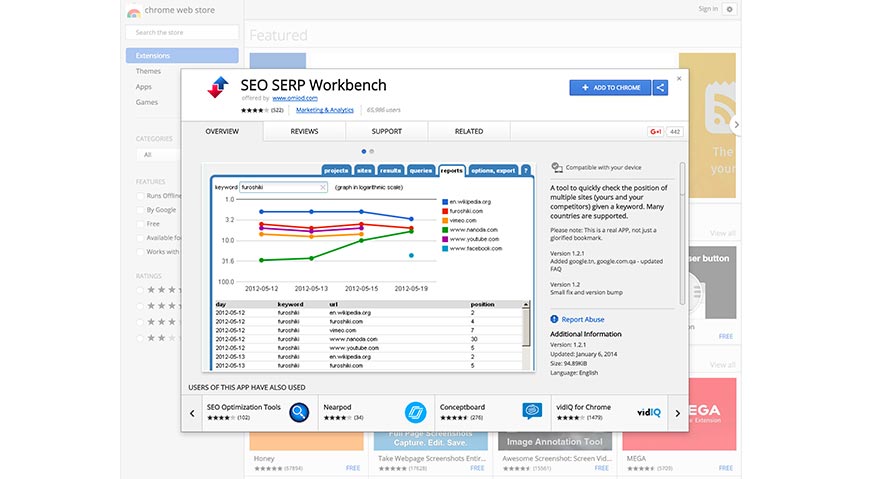
A free Chrome extension by Omiod that checks Google rankings for multiple domain/keyword combinations directly from your browser without leaving the SERP. Enter combinations in a small panel and the extension runs the searches in-browser, returning color-coded position data you can copy into Google Sheets or Excel for historical tracking. An offline-capable mode lets you compile results even with a flaky connection. Google-only, but fast and free — ideal for ad-hoc competitive checks while researching or for SEO consultants doing quick audits on a prospect’s site before a pitch call.
22. ProRankTracker
ProRankTracker is a dedicated rank tracker with standout coverage of mobile rankings, YouTube video rankings, Google Maps positions, and local results in addition to standard desktop tracking. It’s one of the few tools that tracks YouTube video positions as a first-class feature, which matters for creators and video-heavy SEO strategies. White-label reporting for agencies, native iOS and Android apps for on-the-go monitoring, and a generous 7-day free trial that works without credit card. Plans start around $19/month for 100 keywords — one of the more affordable dedicated trackers on this list. This slot previously covered Free Monitor by Cleverstats, whose vendor site is dead.
23. Ubersuggest
Ubersuggest is Neil Patel’s keyword research and rank tracking platform. The free tier is unusually generous — daily keyword ideas, content suggestions, site audit, backlink checks, and rank tracking on a modest keyword allowance. Paid plans start at $29/month with lifetime one-time-payment deals occasionally offered for Individual, Business, and Enterprise tiers. Particularly strong for content marketers who want keyword ideas, topic suggestions, and competitor content analysis alongside rank data in one view. AI-powered writing and content strategy features have been added over the last year to compete with the newer AI-era tools. This slot previously covered Tiny Rocket Lab, whose domain is no longer reachable.
24. Whitespark
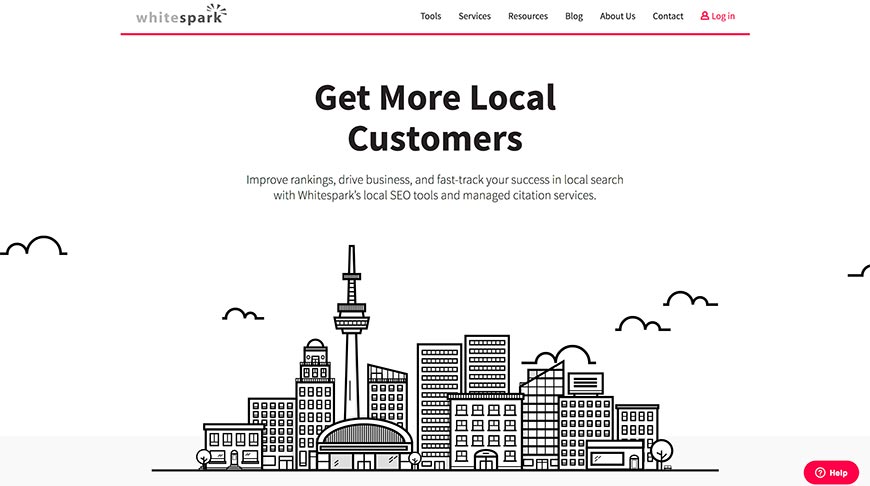
Whitespark is the go-to for local SEO. Local rank tracking (Google Maps plus organic), the best Local Citation Finder on the market, and Reputation Builder for review management. Plans start around $24/month for small businesses; $49/month unlocks most agency features.
25. Sistrix
Sistrix is a European SEO platform built around the “Visibility Index” — a weighted score of a domain’s ranking across its keyword universe, updated weekly and charted over years. That single-number visibility view is Sistrix’s signature deliverable, widely used in German and broader European SEO circles to diagnose algorithm-update winners and losers. Beyond visibility, it covers keyword research, SERP feature tracking, competitor monitoring, and content intelligence. Particularly strong for marketers in DACH (Germany/Austria/Switzerland) and Southern Europe where Sistrix has deeper local keyword databases than US-centric competitors. Plans start at €99/month for the basic visibility module; fuller suite pricing adds content and competitor modules. This slot previously covered Traffic Travis, which was discontinued and absorbed into its parent company Affilorama.
26. GeoRanker
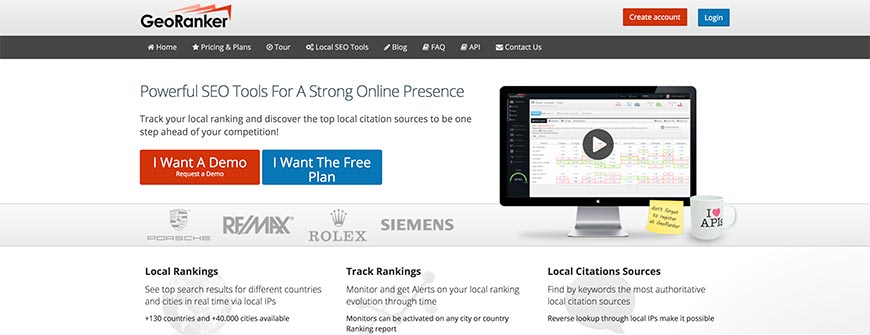
GeoRanker specializes in local and geographic rank tracking, covering Google, Bing, Yahoo, YouTube, and mobile by city, region, or GPS coordinate. White-label reports included. Plans start around $99/month.
27. The Search Monitor
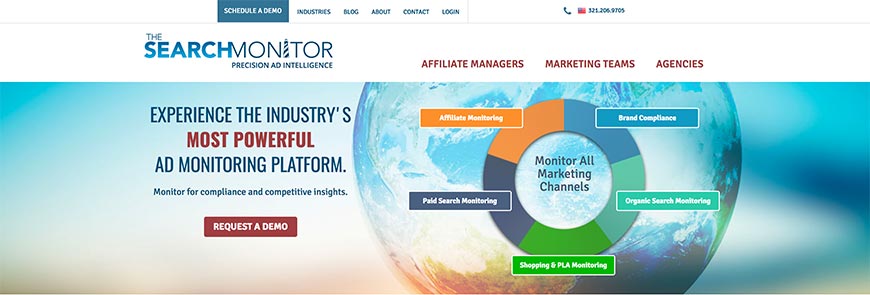
The Search Monitor focuses on paid-search and brand-monitoring competitive intelligence rather than pure organic rank tracking. It watches competitors’ paid ad copy, organic rankings, affiliate activity, trademark use, and promotional claims across Google, Bing, Yahoo, YouTube, and Baidu. Particularly valuable for brands managing affiliate programs, protecting trademarks, or tracking unauthorized resellers. Alerting catches competitors bidding on your brand name or affiliates breaching program rules within hours. Enterprise-tier pricing (starting in the high hundreds per month); request a quote for a scope matched to your monitoring surface. Probably overkill for pure organic SEO work but the go-to choice if paid search compliance and brand protection are part of your brief.
28. Seobility
Seobility is a well-rounded all-in-one SEO platform from German developers that covers rank tracking, site audit, backlink analysis, and on-page optimization without the enterprise price tag. The free tier is unusually generous — a full site audit with up to 1,000 pages crawled and 100 rank-tracked keywords, which is enough for many small sites to get by without ever paying. Paid Premium plans start around $50/month and lift the crawl and keyword limits while adding white-label reports, multi-user team access, and additional competitor projects. Agency plan available for consultants managing multiple clients. For budget-conscious SEOs who want substance over marketing polish, Seobility punches above its weight. This slot previously covered iSpionage, whose domain is no longer reachable.
29. Rank Tracker (SEO PowerSuite)
Rank Tracker is the desktop flagship of SEO PowerSuite — a Windows, Mac, and Linux app that stores your data locally on your machine and runs scans from your own IP rather than a shared cloud pool. That local-install model appeals to agencies with data-privacy requirements or teams that prefer paying once instead of monthly. Free version tracks unlimited keywords (impressive for any tier) with manual updates; paid plans add scheduled scans, SERP history, competitor tracking, keyword research, and white-label client reports. Professional license at $149.75/year; Enterprise at $349.75. Bundled with SEO SpyGlass (backlinks), WebSite Auditor (on-page), and LinkAssistant (link prospecting) when you buy the full PowerSuite. This slot previously covered Moonsy Position Checker, whose domain is no longer reachable.
30. Keyword Insights
Keyword Insights is an AI-era keyword and content intelligence platform that bridges keyword research, rank tracking, and content production. Its standout feature is automated keyword clustering — it groups thousands of keywords by search intent and topical similarity so you can plan content around topic clusters rather than individual terms. AI-generated content briefs and draft outlines accelerate the handoff from research to writing. Rank tracking comes bundled alongside the research tools. Plans start around $58/month for the Basic tier (sufficient for freelancers and solo content marketers), with Professional and Agency tiers for teams running larger content operations. This slot previously covered Alexa Rank Checker, which Amazon shut down on May 1, 2022 — ending a 25-year-old web-traffic-ranking service.
Keyword Ranking in the Age of AI Search
Traditional rankings still matter, but the top of the SERP is changing. Google’s AI Overviews now appear on roughly 48% of searches (BrightEdge, Feb 2026) and reduce click-through for position 1 by up to 58% (Ahrefs, Dec 2025). Position 1 isn’t what it used to be when AI pulls the answer above every blue link.
The newer, still-emerging category of AI visibility tracking — are you being cited in AI Overviews, ChatGPT, Claude, Perplexity? — sits alongside traditional rank tracking rather than replacing it. Most of the platforms on this list (Ahrefs, Semrush, SE Ranking, Serpstat) have rolled out AI Overview presence tracking in the last year. Expect every tool here to add similar features within the next 12 months. For a broader look at the landscape, see our guide to SEO, AEO, and GEO tools for 2026.
Frequently Asked Questions
What’s the difference between keyword research and rank tracking?
Keyword research is finding the terms worth ranking for — search volume, intent, difficulty, related variations. Rank tracking is monitoring your position for terms you’ve already chosen. Most tools on this list do both, but some (Google Keyword Planner, Keyword Insights) lean research-heavy while others (AccuRanker, Wincher, ProRankTracker) are pure trackers.
How often should I check my keyword rankings?
Daily updates are the industry norm for paid tools, but you don’t need to look every day. A weekly review for trends, plus automated alerts on significant changes, is enough for most sites. For sites running frequent content changes or in active recovery from a Google update, daily review for a few weeks is worth it.
Do free rank checkers work as well as paid tools?
For a quick one-off check on a single keyword, yes — SERPs.com, Small SEO Tools, and Google Search Console will tell you where you stand. For ongoing tracking across dozens or hundreds of keywords with history, competitor comparison, and alerts, paid tools are worth the cost.
Does my actual ranking differ from what a tool reports?
Often, yes. Google personalizes results based on location, device, history, and logged-in state. A rank tracker uses a standardized proxy (or residential IP) from a specified location and device, which approximates the “average” user. Your own logged-in Chrome is the least reliable place to check — run an incognito window in a clean browser, or use Search Console’s Performance report for your site’s actual average position.
Bottom Line
Pick the tool that matches your use case, not the one with the longest feature list. Freelancers and small blogs do fine with Wincher, Ubersuggest, or SERPWatcher. Agencies managing multiple clients lean on AccuRanker, SE Ranking, or Moz Pro. Enterprises end up on Semrush, Ahrefs, or Sistrix. Local SEO goes to Whitespark. And if you want keyword tracking tied to your site’s structure, content inventory, and accessibility audit in one tool, DYNO Mapper is worth a look.
Whatever you choose, measure the right things: not just position changes, but clicks, impressions, SERP features won and lost, and — newly in 2026 — citations inside AI Overviews. Those are the numbers that actually tell you whether your SEO is working.