
Choosing a domain name is one of the more consequential decisions you’ll make for a website — it shapes brand recall, search visibility, and whether visitors can actually find you. The good news for 2026: tools, tactics, and the available namespace have all matured. Bad news: the most desirable .com names are still mostly taken, premium pricing has crept up, and the registrar landscape has reshuffled (Google Domains shut down in 2023). This guide covers what to think about, current registrar and tooling options, and practical pitfalls to avoid.
Establish your brand
A strong domain name should sound like a brand. Brands typically don’t use hyphens, numbers, or special characters — neither should your domain. Read it aloud; if it doesn’t come off the tongue cleanly, simplify it. The test most often used: would you be comfortable saying this domain on a podcast or a phone call without spelling it out? If not, keep iterating.
Make it memorable and easy to spell
Hard-to-spell or hard-to-pronounce domains cost you traffic. Word of mouth is the most durable advertising — and an easy domain name is what makes that work. Avoid uncommon spellings, made-up portmanteaus that read awkwardly, and homophones that send users to the wrong place. If you do choose a clever name, plan to pair it with consistent visual branding so the spelling sticks.
Keep it short
Shorter is better. Six to fourteen characters is the sweet spot — long enough to be specific, short enough to fit on a business card and a podcast title screen without truncation. Each additional character increases the chance of typos and reduces shareability.
Pick the right TLD
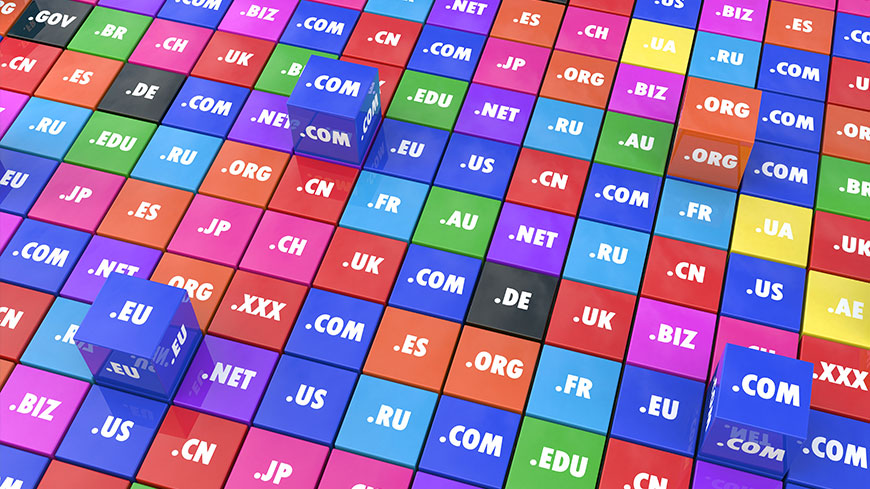
The TLD landscape has expanded substantially since the early-2000s .com-only era. Current strong choices by use case:
- .com — still the gold standard for general-purpose websites, e-commerce, and brand-recognition projects. Most users default to typing .com regardless of what your actual TLD is.
- .io, .ai, .dev, .app — popular for tech, startups, AI products, and developer tools. Pricing is higher than .com (.ai runs $50-100/year, .io and .dev around $30-50/year).
- .co — strong .com alternative; widely treated as a near-equivalent and used by many startups.
- .shop, .store — recognizable for e-commerce; particularly useful when the .com is taken.
- .tech, .design, .studio, .agency — descriptive TLDs that signal industry without needing the noun in the name itself.
- Country-code TLDs (ccTLDs) — .ca (Canada), .it (Italy), .uk (United Kingdom), .de (Germany), .au (Australia), .br (Brazil), .jp (Japan). Strong fit for businesses that primarily serve a single country.
- .xyz, .me, .info — broadly available and inexpensive; weaker brand-recall by default.
For most businesses, the playbook is: try .com first, then a strong alternative (.co, .io, .ai, .shop, or your country-code TLD), then a creative variant of your preferred name. Avoid combinations that look spammy (long numbers in the middle, hyphens between every word).
Avoid trademark infringement
Trademark issues can shut down a website on day one. Even if your domain isn’t identical to a registered trademark, “confusingly similar” can be enough for a successful UDRP (Uniform Domain-Name Dispute-Resolution Policy) action. Search before you buy:
- USPTO TESS for U.S. trademarks (uspto.gov/trademarks/search/trademark-database).
- EUIPO eSearch for European Union trademarks.
- TMView for international cross-jurisdictional searching.
- Google search the proposed name in quotes to surface unregistered marks that could still cause confusion.
If you’re investing meaningfully in a brand, run the search yourself first and consider a trademark attorney for high-stakes names. UDRP and the broader URS (Uniform Rapid Suspension) process are real and used regularly.
Make the name self-explanatory
A great domain telegraphs what the site does. Visitors and search engines should be able to guess the topic from the name alone. Counter-example: “hellfire666.net” is a poor choice for selling seashells; “seashells.com” (if available) is much better. Branded names like Amazon work because of the marketing budget behind them — they didn’t start out describing a marketplace.
Include a keyword if you can — but don’t over-optimize
Including a relevant keyword in the domain modestly helps recall and search-engine recognition. The catch: heavily keyword-stuffed exact-match domains (e.g., best-cheap-shoes-online.com) lost ranking power years ago and now read as spammy. Aim for a brandable name that happens to include a keyword, not a keyword-only string. If you can’t fit a keyword naturally, skip it — strong content and links matter more than the domain itself.
Get creative when the obvious names are gone
Most one-word .coms have been registered for years. If your first-choice name is taken, options include:
- A two-word combination (often called a “compound” — e.g., Slack “slack” → originally Slack used
slack.comafter acquiring it). - Adding a prefix like “get,” “try,” or “join” (getmovo.com, tryflow.com).
- Adding a domain-relevant suffix (-app, -hq, -labs).
- Switching the TLD to .co, .io, .ai, or your industry-specific TLD.
- Coining a new word entirely (Spotify, Twilio, Discord all coined new words and built them into brands through marketing).
Buy defensive variants
Once you commit to a domain, consider buying common misspellings, alternative TLDs, and obvious variants. Set them up as 301 redirects to your canonical domain so traffic flows correctly and competitors can’t cybersquat. The cost is modest (typically $10-20/year per domain at most TLDs); the protection against typo traffic loss and competitor mischief is real.
Use modern domain-name generators
If you’re stuck on naming, AI-powered generators have become genuinely useful since 2023:
- Namelix — AI-generated brandable name suggestions with logo previews.
- BrandSnap, Hostinger AI Name Generator, Squarespace Business Name Generator — similar AI-driven options.
- LeanDomainSearch, Nameboy, Shopify Business Name Generator — older keyword-based generators that still work for fast brainstorming.
- ChatGPT, Claude, or Gemini — general-purpose LLMs are surprisingly effective for naming sessions; iterate with constraints (industry, tone, length, available TLDs).
Run a thesaurus pass (Merriam-Webster online) for adjacent terms when you’ve exhausted your initial keyword. Combining a brand-suggesting tool with a thesaurus typically produces enough viable candidates to find an available domain.
Choose a registrar carefully
The registrar landscape shifted notably in 2023-2024 with Google Domains shutting down (announced June 2023; existing customers migrated to Squarespace Domains). Current strong options:
- Cloudflare Registrar — at-cost pricing (no markup), strong defaults, good fit if you’re already using Cloudflare DNS.
- Namecheap — competitive pricing, free WHOIS privacy, broad TLD coverage.
- Porkbun — well-priced, transparent, popular with developers.
- Hover — clean UI, no upsells.
- Squarespace Domains — picked up Google Domains’ customers; integrated with Squarespace site builder.
- GoDaddy — largest by volume; aggressive upsell pattern but reasonable starting prices.
Two registrar features now matter that didn’t a decade ago: WHOIS privacy (free at most modern registrars; standard since GDPR took effect May 2018; ICANN’s RDAP — Registration Data Access Protocol — replaced the legacy WHOIS protocol) and auto-renewal with notification. Lapsed domains can be snapped up by squatters within hours.
What to do if your dream domain is taken
Three realistic paths:
- Contact the current owner. Use a WHOIS lookup or RDAP query (most registrars offer one), or simply email
info@or contact addresses listed on the domain. Many parked domains are quietly for sale. - Browse domain marketplaces. GoDaddy Auctions, Sedo, Afternic, SnapNames, Flippa. Dan.com (a popular marketplace) was acquired by GoDaddy in 2022 and folded into Afternic by late 2024.
- Use a domain broker for high-value targets. Brokers (often through GoDaddy or independents) negotiate on your behalf for premium names. Expect a 10-20% commission on the sale price.
If the domain is genuinely unavailable and the owner won’t sell at any reasonable price, move on. A great domain helps; great content, brand, and execution matter more.
Check the domain’s history before you commit
Don’t buy a domain without checking what was previously hosted there. Past misuse can leave a mark in search engines, blocklists, and email reputation:
- Wayback Machine — see historical snapshots of the domain’s past content.
- Spam/blocklist checkers — MXToolbox, Sender Score, Talos to verify the domain isn’t blocklisted.
- Backlink history — Ahrefs or Semrush domain overview to spot inbound spam links from a previous owner.
If the history shows red flags (PBN spam, blocklisted email reputation, or content from a sanctioned business), you may need to file disavow requests, change registrars, or pick a different name.
Frequently asked questions
Is .com still important in 2026?
Yes — for general-audience and consumer-facing brands, .com remains the most-trusted and most-typed extension. For tech and startup contexts, .ai, .io, .co, and .dev are widely accepted. Pick based on your audience; don’t default to .com if a stronger TLD-name combination is available.
How much should I expect to pay for a domain?
A standard new registration runs $10-15/year for .com, $30-60/year for .io or .ai, and varies for less-common TLDs. Premium domains (already registered, listed for sale on marketplaces) range from a few hundred dollars to seven figures for top-tier .coms. Renewal pricing can differ from first-year promotional pricing — check renewal rates before committing.
What happens if I let my domain expire?
Most registrars offer a 30-day grace period after expiration during which you can renew at standard cost, then a 30-day redemption period at a higher fee, then the domain is released. Domain squatters monitor expiration auctions and snap up valuable expired names quickly. Use auto-renew and keep your registrar contact email up to date.
Should I register multiple TLDs of my brand?
For most businesses, yes — at least your primary .com plus the most-likely typo and TLD variants. The cost is modest ($30-100/year for a few defensive registrations) compared to brand confusion or competitor squatting later.
Is there an SEO benefit to including keywords in the domain?
A small one. Google has explicitly downweighted exact-match domains since 2012, so heavily keyword-stuffed names no longer rank automatically. A naturally-included keyword in a brandable name is fine; a string of keywords mashed together (cheap-shoes-buy-online.com) reads as spammy and underperforms.
The bottom line
The right domain is short, brandable, easy to remember, free of trademark conflict, and ideally on a TLD that fits your audience. Use AI-powered generators to brainstorm, check trademarks before buying, register defensive variants, pick a modern registrar with privacy and auto-renew, and verify the domain’s history before launching. The domain itself won’t make or break your business — content, brand, and execution matter more — but a well-chosen name removes friction and makes everything that comes after a little easier.