

Influencer marketing pricing has expanded dramatically since this article was originally written. Self-serve marketplace campaigns now run from a few hundred dollars; mid-market platforms typically run $1,000-$10,000 per month; enterprise creator-management software runs $25,000+ per year. The right tool depends less on price than on program scale, the platforms you’re targeting, and how much managed service you need.
An influencer marketing platform is software that helps brands discover, contract, manage, pay, and measure creators. Platform models vary: discovery-first (search a database, filter by audience criteria), campaign marketplace (post a brief, creators apply), enterprise CRM (manage long-term relationships across many creators), or managed-service-plus-tech (the platform handles execution).
Influencer tiers are now well-defined: nano (1K-10K followers), micro (10K-100K), mid-tier (100K-500K), macro (500K-1M), and mega/celebrity (1M+). Each tier has different engagement-rate norms, pricing, and ideal use cases. Most modern programs combine creator tiers rather than chasing the largest accounts only — micro and nano creators often deliver better engagement per dollar.
Categories of influencer marketing tools
The 39 tools below break down into seven functional categories. Most mature programs use 2-4 tools across categories rather than relying on a single platform:
- Enterprise creator-management platforms — end-to-end CRM-style platforms with discovery, campaign management, payments, content rights, and measurement. CreatorIQ, Aspire, Grin, Captiv8, Mavrck, Traackr, Sprout Social with Tagger, Open Influence, IZEA. Pricing usually starts at $25K-$50K/year.
- Discovery-and-analytics tools — searchable creator databases with audience demographics, engagement quality, and fraud detection. HypeAuditor, Modash, Klear (Meltwater), HYPR, Heepsy, Lefty, Influencity. Pay-as-you-go or subscription tiers.
- Marketplaces (two-sided) — brands post campaigns; creators apply or are matched. Influence.co, Ainfluencer, Mavely, BrandBacker, Webfluential, Find Your Influence, #paid. Lower barrier to entry; less customization.
- Content discovery and amplification — surface high-performing content and the creators behind it. BuzzSumo, Brandwatch, Mention, Followerwonk. Particularly useful for content-marketing-driven creator outreach.
- Outreach and digital-PR platforms — built around prospecting, email outreach, and relationship management at scale. Pitchbox, BuzzStream, NinjaOutreach. Common in agency settings for SEO and link-building campaigns.
- Specialized verticals — Onalytica (B2B), Zoomph (sports/entertainment), Lefty (luxury/fashion/beauty), Storyclash (Instagram Stories), Markerly (micro/nano programs), Whalar (managed services), NeoReach (cross-platform). Pick when your program needs domain-specific expertise.
- Back-office: payments and rights — handle 1099s, international payments, content licensing, and contracts. Lumanu specializes here; most enterprise platforms include these capabilities natively.
Influencer marketing tools
1. Upfluence
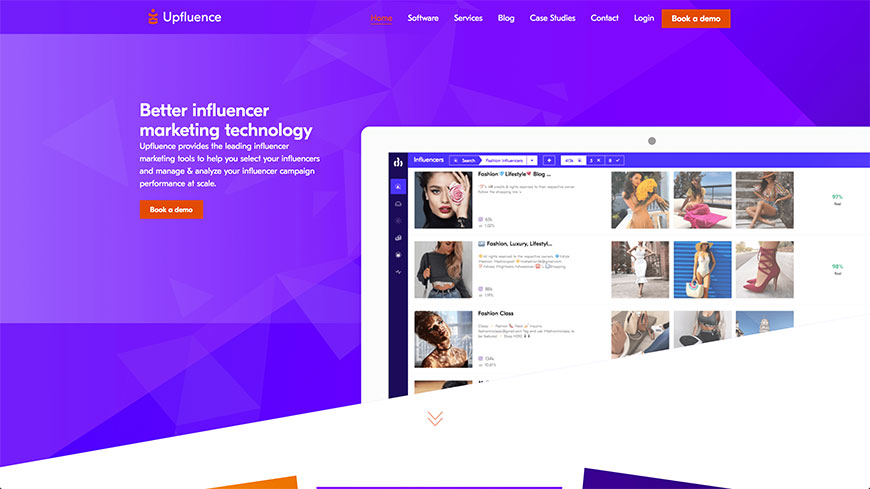
Upfluence is an enterprise influencer marketing platform with a 4M+ creator database across Instagram, TikTok, YouTube, Twitter/X, Pinterest, Twitch, and blogs. Self-serve and managed-service tiers. Strong fit for ecommerce brands; integrates with Shopify, WooCommerce, BigCommerce, Klaviyo, and HubSpot for affiliate-style attribution and influencer payments.
2. Aspire (formerly AspireIQ)
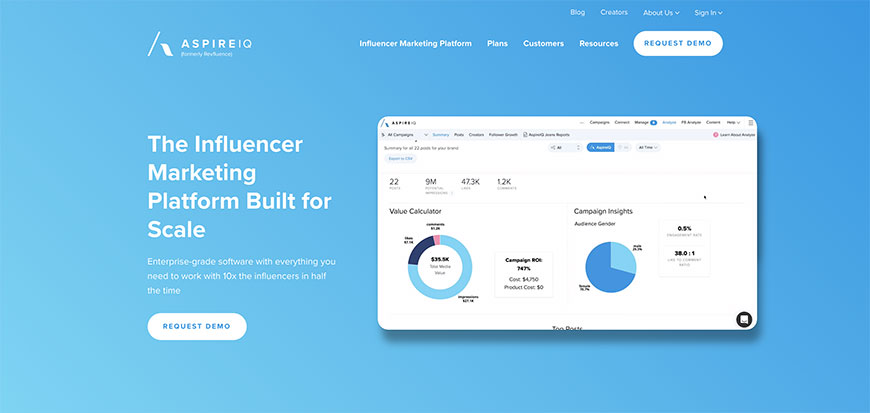
Aspire (rebranded from AspireIQ in 2021, originally Revfluence) is a creator marketing platform focused on long-term creator relationships rather than one-off campaigns. Strong content-collaboration features, in-platform messaging, contracts, payments, and shoppable content. Popular with DTC brands.
3. Hypr
HYPR (HYPR Brands) provides audience analytics on more than 12 million influencers — focused on demographic and psychographic data about each creator’s audience rather than their public metrics. Especially useful for matching brand audience profiles with influencer audience profiles for B2C campaigns.
4. CreatorIQ
CreatorIQ is one of the leading enterprise creator-management platforms — used by Disney, Unilever, Nestlé, and Sephora among others. Includes creator discovery, campaign management, content workflow, payments, performance measurement, and a connected creator CRM. Built for brands and agencies running large-scale, multi-creator programs.
5. Captiv8
Captiv8 is an enterprise influencer marketing platform combining creator discovery (with AI-driven matching), campaign management, content collaboration, and measurement. Strong on data-driven targeting and brand safety; supports Instagram, TikTok, YouTube, X, Pinterest, and Snapchat.
6. Klear (Meltwater)
Klear is now part of Meltwater (acquired 2021) and operates as the Meltwater influencer marketing module. Strong audience-analytics database (50M+ creators), competitive intelligence, and content discovery. Particularly useful when paired with Meltwater’s broader media-monitoring suite.
7. Grin
Grin (now GRIN) positions itself as the “creator management” platform for DTC brands. Strong product-seeding workflows (sending products to creators), content rights management, payments, and ecommerce integration with Shopify, WooCommerce, and others. A common choice for fast-growing consumer brands.
8. BrandBacker
BrandBacker is a creator network with built-in campaign management, content collaboration, and analytics. Self-serve marketplace where brands post campaigns and creators apply; strong for product-seeding programs and content generation at scale.
9. Mavely
Mavely is a creator-and-affiliate marketplace combining influencer outreach with shoppable links and trackable performance. Particularly useful for brands wanting attributable revenue rather than just reach metrics — every creator post links to trackable conversions.
10. Find Your Influence

Find Your Influence (FYI) is a self-serve and managed-service influencer marketing platform. Discovery across Instagram, TikTok, YouTube, blogs, and Pinterest; campaign management, contracts, and payments built in. Mid-market focus.
11. Modash
Modash provides one of the largest searchable influencer databases — 250M+ creators across Instagram, TikTok, and YouTube. Strong on filter granularity (audience location, age, gender, interests) and pay-as-you-go pricing that suits smaller programs.
12. HypeAuditor
HypeAuditor is the category leader in influencer fraud detection and audience-quality analytics. Detects fake followers, engagement pods, and audience-quality issues that other discovery tools miss. Used both standalone and as a verification layer alongside platforms like Aspire or Grin.
13. IZEA
IZEA Worldwide (NASDAQ: IZEA) is one of the longest-running influencer marketing platforms (founded 2006). Acquired Julius and TapInfluence in 2018-2019. The IZEA Flex platform combines creator discovery, content marketplace, and managed services.
14. Whalar
Whalar is a creator company combining a managed-service agency with proprietary technology. Strong fit for brands that want strategic creator-program design plus execution rather than self-serve discovery. Cross-platform expertise across Instagram, TikTok, YouTube, and emerging platforms.
15. Storyclash
Storyclash specializes in Instagram Stories analytics and creator discovery — particularly useful for brands focused on Stories content rather than feed posts. Real-time tracking of creator content, brand mentions, and competitive monitoring.
16. Onalytica

Onalytica focuses on B2B influencer marketing — analyst, executive, and thought-leader influence rather than consumer creator marketing. Discovery, relationship management, and content collaboration tuned for B2B context. Common in tech, financial services, and healthcare.
17. #paid
#paid is a creator marketplace focused on paid-content campaigns with measurable performance. Creators “handraise” for brand campaigns; brands review and select. Strong on brand safety, contracts, and rights management.
18. Traackr
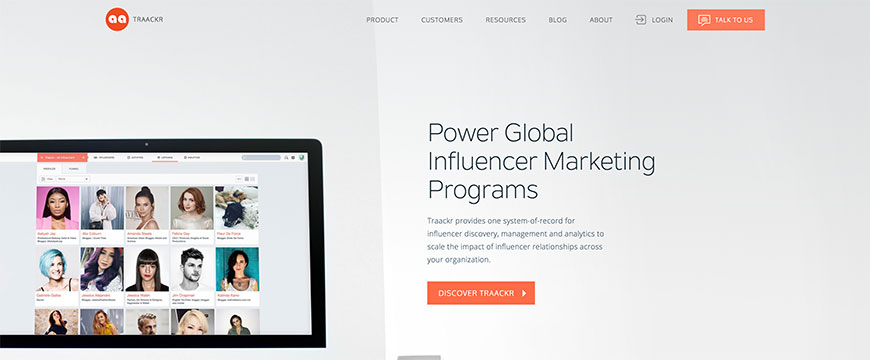
Traackr is one of the original enterprise influencer marketing platforms (founded 2008). Heavy focus on analytics, IROI (Influencer Return on Investment) measurement, and program governance. Strong fit for global brands with complex multi-region programs.
19. NeoReach
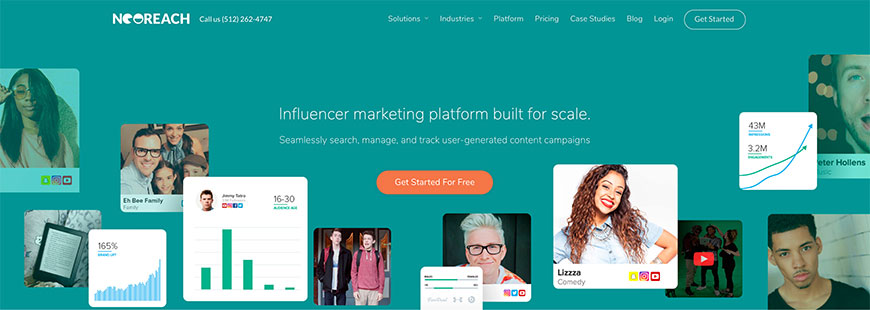
NeoReach offers a mix of influencer discovery, campaign management, and managed-service execution. Strong on cross-platform reach across Instagram, TikTok, YouTube, Twitch, and emerging platforms. Mid-market and enterprise focus.
20. Webfluential
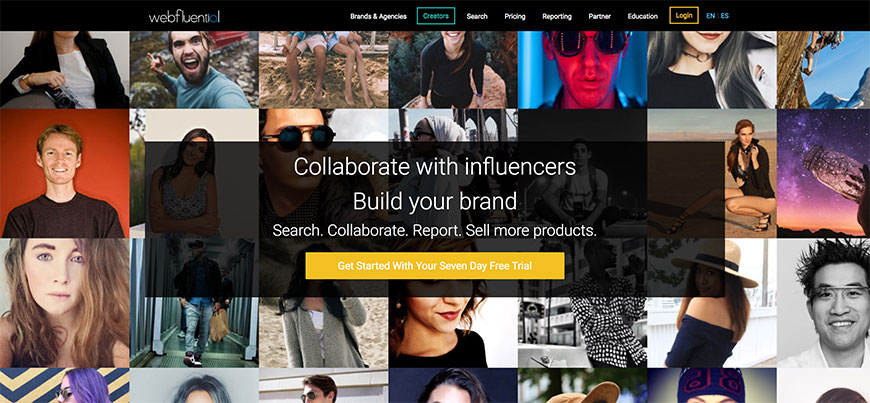
Webfluential is a self-serve influencer marketplace with a focus on transparency and creator-direct deals. Particularly active in EMEA and APAC markets. Smaller than the enterprise-focused platforms but strong for direct creator-brand commerce.
21. Zoomph
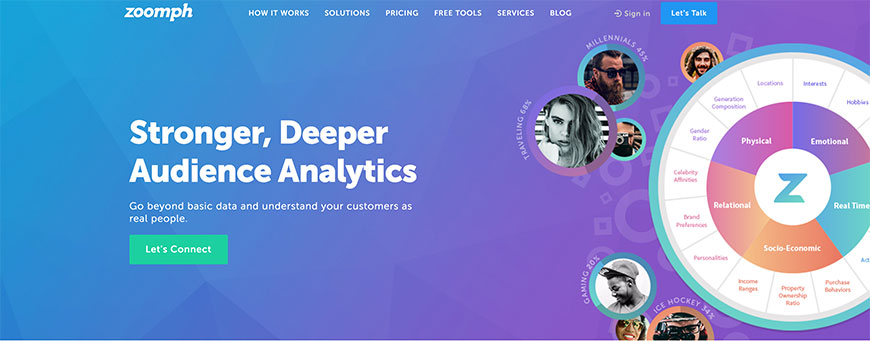
Zoomph specializes in sports, entertainment, and live-event influencer marketing — strong fit for brands sponsoring teams, leagues, and athletes. Audience analytics, sponsorship valuation, and content tracking across game-day and beyond.
22. BuzzSumo (Cision)
BuzzSumo (acquired by Brandwatch 2017, then Cision 2021) is a content-discovery and influencer-research tool. Trace high-performing content by topic, surface authors and amplifiers, and identify influencers by engagement rather than follower count alone. Strong for content-marketing teams.
23. BuzzStream
BuzzStream is an outreach and relationship-management platform — particularly strong for digital PR, link-building outreach, and influencer relationship management. Email outreach, response tracking, and CRM-style relationship history.
24. Heepsy
Heepsy is an influencer search engine with 11M+ creator profiles across Instagram, TikTok, YouTube, and Twitch. Pay-as-you-go and subscription tiers; strong for self-serve discovery and audience analysis without enterprise pricing.
25. Sprout Social (with Tagger)

Sprout Social (NASDAQ: SPT) acquired Tagger Media in October 2023, integrating Tagger’s influencer marketing capabilities into the broader Sprout social media management platform. Strong fit for brands already using Sprout for social listening, publishing, and customer care.
26. Followerwonk
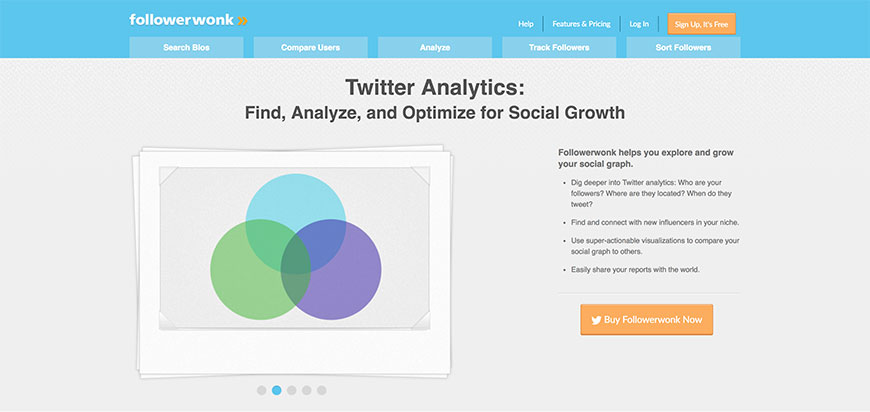
Followerwonk specializes in Twitter/X analytics — analyzing followers, comparing accounts, and identifying influential users by topic. Spun out of Moz, now operating independently. Less central than it was in pre-Twitter-acquisition era but still useful for X-focused programs.
27. Markerly
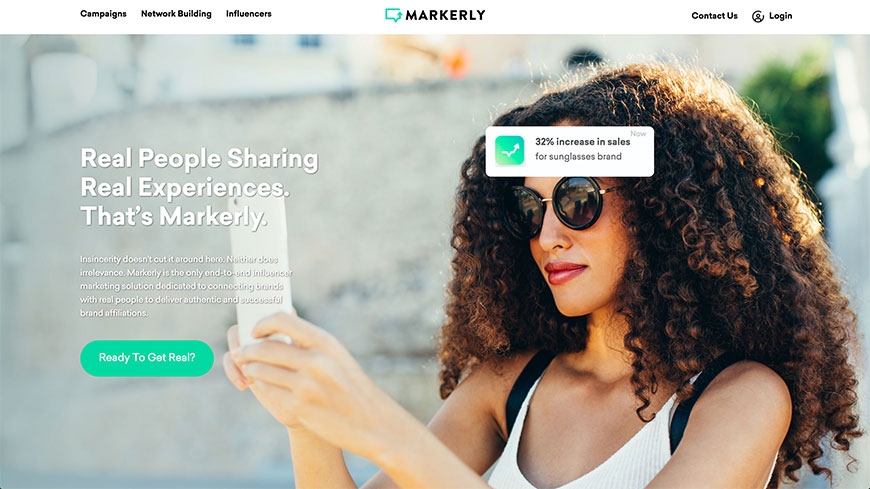
Markerly focuses on micro and nano-influencer programs — campaigns built around large numbers of smaller creators rather than a few big-name personalities. Strong for product-seeding, customer-advocacy programs, and authentic engagement.
28. NinjaOutreach

NinjaOutreach is an outreach automation platform combining influencer search with email outreach. Useful for digital PR, blogger outreach, and link-building campaigns. Less polished than enterprise platforms but accessible at smaller scale.
29. Influencity
Influencity is a Madrid-based influencer marketing platform with creator discovery, campaign management, and analytics. Strong in EMEA markets; supports Instagram, TikTok, and YouTube with detailed audience demographic data.
30. Pitchbox
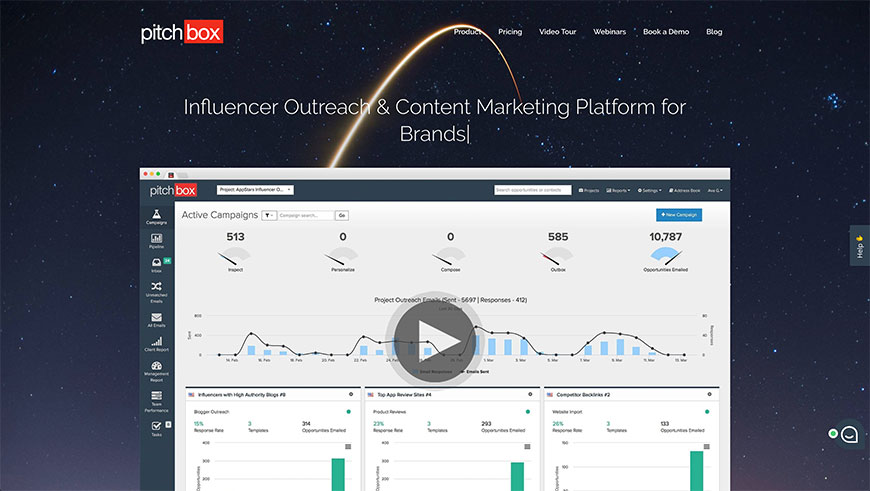
Pitchbox is an outreach and link-building platform widely used by SEO agencies and digital PR teams. Influencer prospecting, personalized outreach at scale, response tracking, and CRM integration. Particularly strong for content-marketing-driven outreach.
31. Influence.co

Influence.co is a community-and-marketplace platform — creators have profile pages, brands have brand pages, and the two can connect for campaigns. Self-serve and accessible to smaller creators and brands. Free entry tier with paid upgrades.
32. Open Influence
Open Influence (originally InstaBrand) is a managed-service influencer marketing agency with proprietary technology. Strong on creator discovery and campaign execution for enterprise brands; works across all major social platforms.
33. Brandwatch
Brandwatch is a social-listening and influencer marketing platform owned by Cision. Strong on competitive intelligence, brand mention tracking, audience analytics, and creator discovery — particularly useful for understanding the broader social conversation around your brand.
34. Tagger Media (Sprout Social)

Tagger Media was acquired by Sprout Social in October 2023 and now operates as part of Sprout’s influencer marketing offering. Pre-acquisition, Tagger was a standalone enterprise platform with creator discovery, campaign management, and measurement. The standalone tagger.com URL still hosts product information.
35. Mavrck
Mavrck is an enterprise creator marketing platform with strong workflow automation, payments infrastructure, and FTC disclosure compliance. Used by Hershey, Microsoft, KraftHeinz, and other large CPG and tech brands.
36. Lumanu
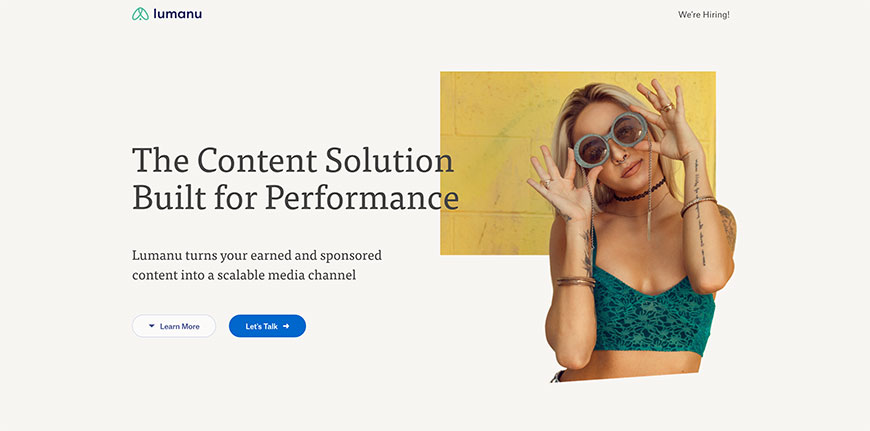
Lumanu specializes in payments and contract management for creator programs — handling 1099s, international payments, content rights, and licensing. Often used alongside other discovery and campaign-management platforms as the back-office layer.
37. Mention
Mention is a social media monitoring platform with creator-discovery capabilities — track brand mentions, identify amplifiers, and surface emerging influencers in your category. Useful as a discovery layer paired with a dedicated influencer marketing platform.
38. Ainfluencer
Ainfluencer is a free influencer marketplace specifically for Instagram and TikTok creators. Brands post campaigns, creators bid; the platform handles communication and contracts. Particularly suited to small-business and self-serve campaigns.
39. Lefty
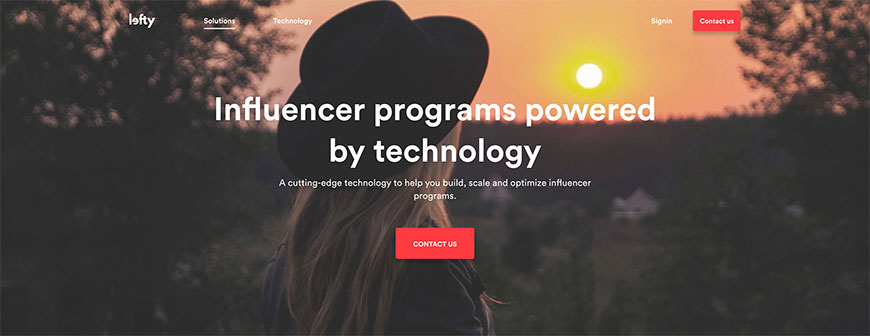
Lefty is an influencer marketing platform focused on luxury, fashion, and beauty brands. Used by Dior, Chanel, Cartier, and other high-end brands; strong content-quality emphasis, EMV (Earned Media Value) reporting, and competitive benchmarking.
How to choose an influencer marketing platform in 2026
The 39 tools above span a wide range of price, scale, and focus. The right pick depends on a few key questions:
- What size is your program? Small/self-serve programs ($500-$5K/month) work well on Heepsy, Modash, Influence.co, NinjaOutreach, Ainfluencer, and Webfluential. Mid-market ($5K-$25K/month) brings in Aspire, Grin, IZEA, BrandBacker, Find Your Influence, and Markerly. Enterprise ($25K+/month or $100K+ annual) is the territory of CreatorIQ, Captiv8, Traackr, Sprout Social with Tagger, Mavrck, and Open Influence.
- Which platforms matter? Instagram-and-TikTok focus narrows the field; YouTube-heavy programs need different discovery tooling; B2B programs need Onalytica or BuzzSumo rather than consumer-creator marketplaces.
- Self-serve or managed? Self-serve platforms put your team in control but require campaign-management expertise. Managed services (Whalar, Open Influence, NeoReach’s managed tier) cost more but include strategy and execution.
- What back-office support do you need? Lumanu specializes in payments, rights, and 1099 handling. Most enterprise platforms include these; smaller marketplaces often don’t.
- How does brand safety and FTC disclosure factor in? The FTC’s updated Endorsement Guides (final rule, July 2023) require clear and conspicuous disclosure of paid relationships. Mavrck, Aspire, CreatorIQ, and Grin all build disclosure compliance into the workflow.
2024-2026 trends shaping influencer marketing
Several material shifts have reshaped the category in the last two years:
- The creator economy went mainstream. Goldman Sachs estimated the creator economy at $250B+ by 2024 with projected growth toward $480B by 2027. Creator marketing now sits alongside paid social and traditional digital advertising in mid-market and enterprise marketing budgets.
- FTC enforcement tightened. The updated Endorsement Guides (final rule July 2023) clarified disclosure requirements; the FTC has issued multiple notice-of-penalty-offense letters and brought enforcement actions against brands using influencers without proper disclosure. Major platforms now build disclosure compliance into the workflow.
- AI-powered creator discovery is now table stakes. Most major platforms now use machine learning for creator-brand matching, audience-quality scoring, content-performance prediction, and campaign optimization. Manual creator searching alone is increasingly obsolete at scale.
- The platform mix diversified. TikTok, YouTube Shorts, Instagram Reels, Bluesky, and Substack are all viable creator surfaces in 2026. Most modern programs run cross-platform rather than single-platform. The U.S. TikTok divestiture/ban uncertainty (2024-2026) accelerated platform diversification.
- Performance attribution improved. Trackable links, attribution windows, and direct ecommerce integration (Shopify, WooCommerce, BigCommerce, Klaviyo) make it possible to measure influencer ROI more precisely than the “reach and impressions” metrics that dominated 2018-2020.
- Long-term creator partnerships displaced one-off sponsorships. Brands increasingly run rolling creator partnerships (3-12 months) rather than single-campaign sponsorships. Platforms like Aspire, Grin, and CreatorIQ are built around this CRM-style model.
- Ambassador and affiliate models converged. The line between “influencer marketing” and “affiliate marketing” has blurred — many programs now combine paid sponsorship with trackable affiliate-style commissions. Mavely, Aspire, and Grin all support this hybrid model.
Frequently asked questions
What’s the difference between an influencer marketing platform and a marketplace?
Platforms (CreatorIQ, Aspire, Grin, Mavrck) provide enterprise software for managing programs end-to-end. Marketplaces (Influence.co, Ainfluencer, Mavely, #paid) are two-sided where brands post campaigns and creators apply or are matched. Platforms cost more but give brands more control and analytics; marketplaces have lower barriers but less customization.
How much should I budget for influencer marketing in 2026?
Realistic 2026 budgets: nano-influencer programs (10K-100K followers) — $500-$5K per creator; micro-influencer programs (100K-500K) — $1K-$10K per creator; mid-tier (500K-1M) — $5K-$50K per creator; macro and celebrity (1M+) — $10K to six figures per post. Add 10-30% for platform fees, content rights, and project management on top.
How has the FTC’s 2023 update changed influencer marketing?
The FTC’s updated Endorsement Guides (final rule, July 2023) tightened disclosure requirements: clear, conspicuous, in-the-language-of-the-target-audience disclosures of all material connections (paid, sponsored, gifted). #ad and #sponsored remain acceptable; vague terms like “collab” or buried disclosures don’t. The FTC has been more active in enforcement actions since 2023, and several major brand programs have been fined for compliance failures. Most enterprise platforms now build disclosure into the content-approval workflow so it can’t be skipped.
Are TikTok creators worth the platform-risk?
Yes, in most cases — TikTok remains one of the highest-engagement platforms, and most major influencer platforms support TikTok creator discovery and campaign management. The U.S. divestiture / ban legislation introduced uncertainty in 2024-2025; brands typically diversify across TikTok, Instagram Reels, and YouTube Shorts to mitigate platform-specific risk. Most creators with significant TikTok followings also publish to Reels and Shorts; cross-platform programs reduce the single-platform exposure.
Do I need a separate fraud-detection tool?
For large programs, yes — fake followers, engagement pods, and bot interactions still inflate metrics across the industry. HypeAuditor is the category leader; many enterprise platforms (CreatorIQ, Aspire, Captiv8, Grin) integrate similar fraud-detection capabilities. For smaller programs, the platform-native fraud signals are usually sufficient.
How important are nano and micro creators?
Increasingly central. Nano (1K-10K) and micro (10K-100K) creators typically have 3-7x the engagement rates of macro creators, cost dramatically less, and produce more authentic-feeling content. Most modern programs run a mix — a few macro creators for awareness plus dozens or hundreds of micro/nano creators for engagement and conversion. Platforms like Markerly, Mavely, Aspire, and Grin specifically support large-scale micro-creator programs.
What about AI-generated influencers and virtual creators?
Virtual influencers (CGI characters with social-media followings, like Lil Miquela) and AI-generated content tied to real creators are growing categories. The FTC’s disclosure rules apply equally — AI-generated endorsements need to be disclosed as AI-generated where relevant. Some brands experiment with virtual influencers; mainstream programs continue to focus on human creators.
The bottom line
Influencer marketing in 2026 is a maturing industry with substantial software infrastructure, clearer regulatory rules, and meaningful sophistication on both the brand and creator sides. The 39 tools above span the discovery-to-payment lifecycle across self-serve marketplaces, mid-market platforms, and enterprise creator-management suites. Pick the tier that matches your program scale, the platforms that match your target audience, and the level of managed service that fits your team’s capacity. The right combination usually means 2-4 tools rather than one — a discovery layer (Modash, HypeAuditor, BuzzSumo), a campaign-management layer (Aspire, Grin, CreatorIQ, or one of the enterprise options), a back-office payments-and-rights layer (Lumanu, or built-in via the campaign platform), and often a specialized tool for your category (Onalytica for B2B, Lefty for luxury, Zoomph for sports).